
 ES
ES NL
NL FR
FR PL
PL SV
SV DE
DEThe Saudi royal family has been coming to Marbella for more than four decades. They built a palace that dwarfs the White House. They brought entourages of 3,000 people. They transformed an economy. And now, quietly, a new generation is doing it all again.
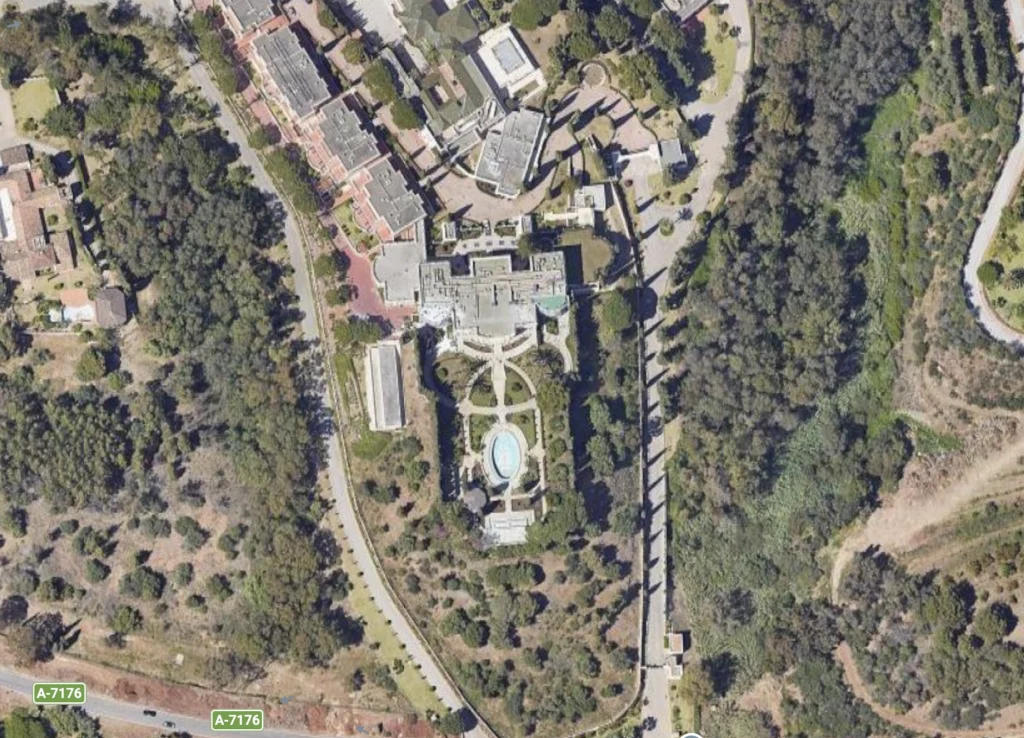
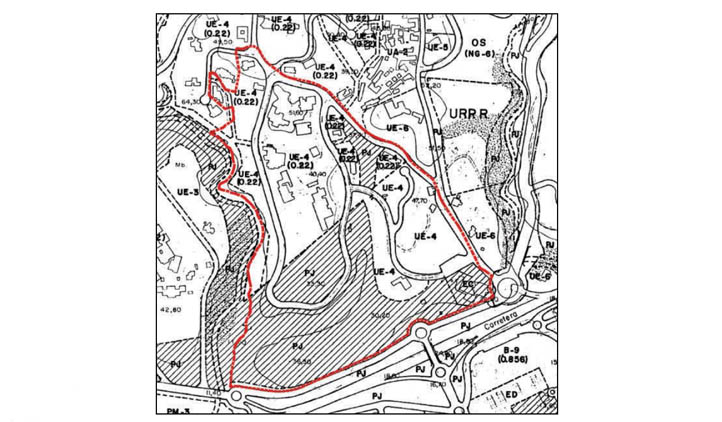
Marbella city hall is processing a reparcelación, a land redistribution, for Finca Al Riyadh, a 189,783 sqm private estate on the Golden Mile. The project, published in the Official Málaga Gazette on June 23, 2026, proposes up to 80 new residential units for the third generation of the Saudi royal family. The main palace compound is not part of this. This is the next chapter.
How It Started: King Fahd and the Palace Bigger Than the White House
King Fahd built a palace bigger than the White House on the Golden Mile in the 1980s, and his family never really left.
In the 1980s, King Fahd of Saudi Arabia chose Marbella as his summer base and proceeded to build one of the most extraordinary private estates in Europe. The Mar-Mar Palace, also known as the El Rocío estate, is a 200-acre compound on the Golden Mile whose marble-facade mansion was deliberately designed to be 150 square metres larger than the White House in Washington D.C. It came with a heliport, a private hospital, a mosque, multiple luxury villas, and vast swimming pools. It operated less like a house and more like a small sovereign territory.
The economic impact was staggering. During the 1980s and 1990s, King Fahd’s annual summer visits brought entourages of up to 3,000 people and hundreds of luxury vehicles to Marbella. A single month-long stay injected tens of millions of euros into local businesses. Hotels, restaurants, jewellers, car dealers, and private security firms all shaped their summers around the royal calendar. Marbella did not just host the Saudi royal family. It built an entire service infrastructure around them.
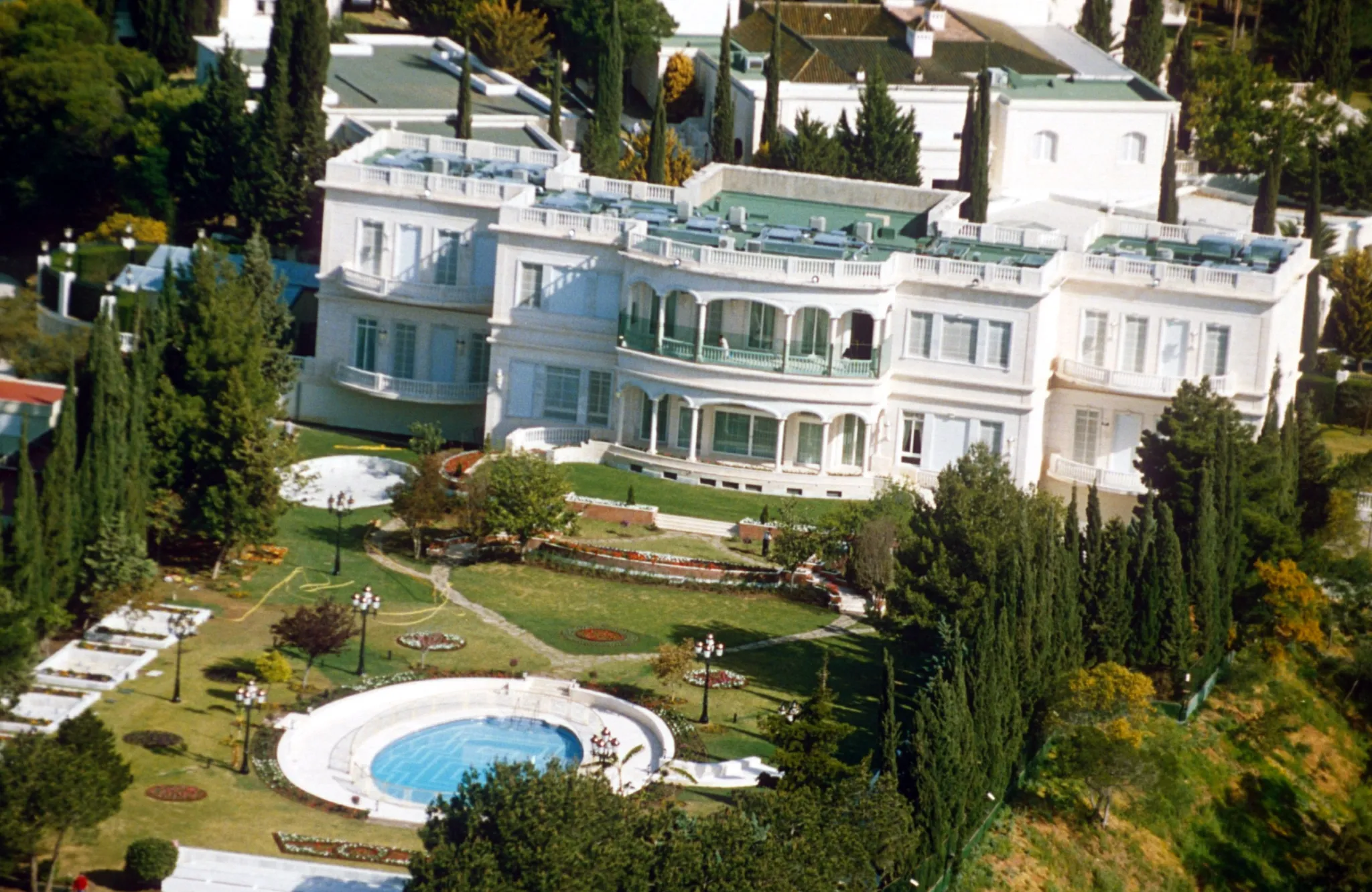
King Fahd died in 2005. Without him, the Mar-Mar Palace fell quiet. Portions of the estate reportedly suffered from neglect and vandalism in the years that followed: a remarkable fate for one of the most opulent private residences in Europe. The gates stayed shut. The compound remained entirely closed to the public, hidden behind dense trees and heavy security.
What did not disappear was the family’s connection to Marbella. Other members of the Saudi royal family continued to use the Golden Mile. The infrastructure stayed. And in May 2017, a new planning modification was quietly submitted to Marbella city hall.
A Decade in the Making
The reparcelación now in process is the result of nearly a decade of institutional commitment. The original planning modification for the sector was submitted in May 2017. Regional approval from the Junta de Andalucía came on September 3, 2024, nearly seven years later. Local approval followed on June 2, 2026, passed by the Local Government Board without announcement at the post-meeting press conference, despite the scale of the project. The gazette publication on June 23, 2026 opened a 20-day public consultation period before final sign-off.
That timeline tells you something important. Planning processes in Spain are not fast. Anyone who has tried to get a building licence in Marbella knows this. The Saudi royal family’s legal and planning teams spent the better part of a decade working through the system (across multiple municipal administrations, through regional government, through public consultation) without walking away. That is not the behaviour of a family hedging its bets on a market they are unsure about.
Mayor Ángeles Muñoz put it plainly: the Saudi royal family still wants to be in Marbella, and the grandchildren of the King will also be able to have their home here. That is a generational statement of intent backed by a nine-year paper trail.
What 30 Million Euros Tells You About the Golden Mile
Marbella city hall will receive 30.7 million euros from this project, structured across three components: 12.2 million in monetised municipal building rights, 12.2 million as indemnity for exemption from the protected housing reserve, and 6.3 million for green space compensation. The total appraised value of all uses across the project lands reaches 185,099,241 euros according to the official documentation.
That 185 million euro figure is a rare piece of hard data in a market where prime land valuations are rarely made public. It reflects what Spanish planning authorities themselves assign to buildability on the Golden Mile at current rates. And the 30.7 million in public compensation (roughly 16 percent of total assessed value) is not a negotiated number. It follows the legal formula. It is what the land is worth by the rules, not by marketing.
Update, 21 October 2026. The gross figure is not what the town hall keeps. To make the project work the council has to expropriate a road that will be absorbed into the compound and stop being public, at a cost the council puts at 11.3 million euros, which leaves a net of about 19.4 million before the construction tax on the works themselves is added. The planning file also fixes the land numbers: 189,783 m² in the sector, a buildable area of 40,240 m², and up to 80 villas, 50 of which would carry the planning classification of palace. The King Abdulaziz mosque on the estate, with room for more than 800 people, stays where it is, and the private roads and green space inside the compound add up to 145,714 m². The public consultation period closed in July. As of this update we have not found a published definitive approval, and we will add it here when it appears. Figures from Diario SUR, El Español and The Olive Press, 3 to 7 July 2026.
The project also establishes a new urban planning sub-zone called Palacio Real, a bespoke regulatory category created specifically for this estate. There is no equivalent anywhere else in Marbella’s planning structure. Spanish planning law does not produce dedicated sub-zones for single private compounds as a routine matter. The Golden Mile’s scarcity is not a sales pitch. It is written into the legal framework.
Generational Wealth Chooses Marbella
The new units sit on land the family already owns, next to the estate mosque and the original palace, reserved for the family’s third generation.
The expansion covers lands west of the estate mosque, between Camino de la Cruz and arroyo de la Cruz, bounded to the north by calle Sierra Bermeja, separate parcels adjacent to the existing compound, east of the Mar-Mar palace. The official project document is direct about why: the natural growth of the Saudi royal family has created the need to expand current residences and build new ones, and those new residences must meet the same standards of privacy and security as the existing ones.
That language matters. This is not speculative development. It is a family deciding where its next generation will live, and choosing Marbella. Not Monaco. Not Dubai. Not London. Marbella, specifically the Golden Mile, on land they already own, within a compound they have maintained for over forty years.
The pattern is visible across the top of this market. Ultra-high-net-worth families do not treat the Golden Mile as a position to rotate. They treat it as a fixed point. The service ecosystem built around decades of royal and ultra-prime demand: the private security infrastructure, the discreet medical services, the international schools, the direct access to Málaga airport, is not something you replicate easily elsewhere. It took forty years to build. It is one of the reasons serious buyers keep arriving at the same address.
The Finca Al Riyadh reparcelación is a market signal with a very long paper trail. When a family works through nine years of Spanish planning law, on land appraised at 185 million euros, to expand their footprint rather than look elsewhere, they are communicating something that no price index captures. If you are weighing a serious acquisition on the Golden Mile and want to understand what the current opportunity looks like, the team at Santina Homes works exclusively in this market. We are happy to share what we are seeing on the ground.
Frequently Asked Questions
How much is Finca Al Riyadh’s land worth?
The official documentation puts the total appraised value of all uses across the project lands at 185,099,241 euros. That figure comes from Marbella city hall’s own planning file, not from a real estate valuation, making it one of the few public benchmarks for prime Golden Mile land pricing.
When was the Marbella royal estate expansion approved?
The planning modification was first submitted in May 2017. The Junta de Andalucía granted regional approval on September 3, 2024. Marbella’s Local Government Board gave local approval on June 2, 2026, and the gazette publication followed on June 23, 2026, opening a 20-day public consultation period.
How many new units is the Saudi royal family building?
The reparcelación proposes up to 80 new residential units on land west of the existing Mar-Mar Palace compound, intended for the third generation of the Saudi royal family. The existing palace itself is not part of this expansion; it covers separate parcels the family already owns nearby.
How much will Marbella city hall collect from the reparcelación?
The project will bring Marbella city hall 30.7 million euros, split into 12.2 million in monetised building rights, 12.2 million as indemnity for exemption from the protected housing reserve, and 6.3 million for green space compensation. That is roughly 16 percent of the total assessed land value.
What is Palacio Real, the new planning sub-zone?
Palacio Real is a bespoke urban planning sub-zone created specifically for the Finca Al Riyadh estate, with no equivalent elsewhere in Marbella’s planning structure. Spanish planning law rarely produces dedicated sub-zones for a single private compound, underscoring how unusual this estate’s legal status is.
If the area interests you more than the planning politics: our Marbella area guide covers the neighbourhoods around the Golden Mile, and you can browse current property for sale in Marbella or our frontline beach selection.
Big-name investment isn’t limited to the ground, either — air taxi trials between Malaga and Marbella are set for 2028. For the wider market context behind moves like this, see why the coast is a different property market from the rest of Spain.
 English
 Spanish
 Dutch
Dutch French
 Polish
 Swedish
 German