
 ES
 NL
 FR
 PL
 SV
 DE
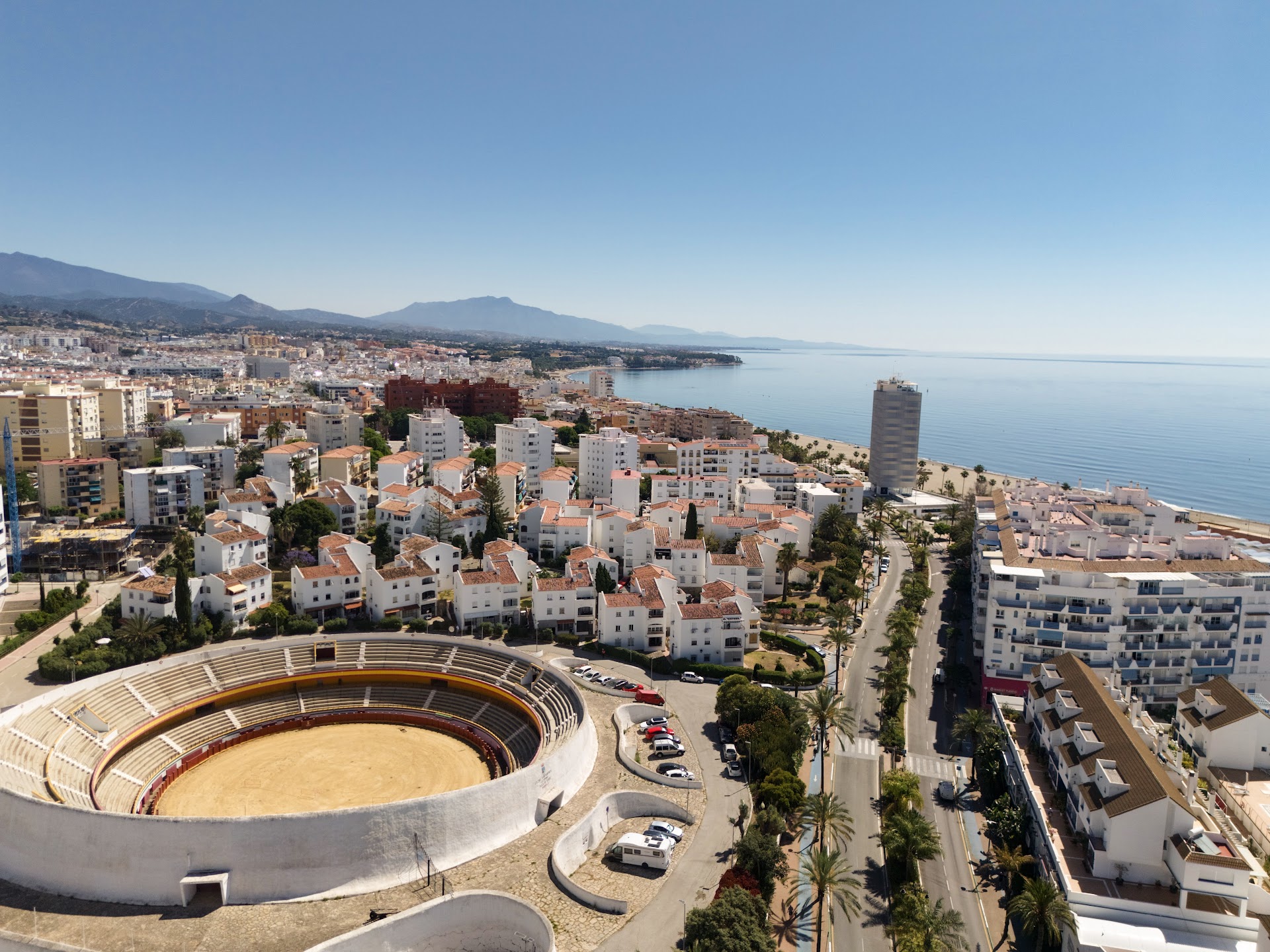
Estepona is one of the fastest-changing towns on the Costa del Sol. Once a quiet fishing village, it has reinvented itself as a vibrant coastal destination without losing its Andalusian soul. The population has grown from around 69,500 in 2019 to 79,621 as of January 2025 – over 10,000 new residents in five years, one of the fastest growth rates of any municipality in Málaga province. Roughly a quarter of residents are foreign nationals, spanning 135 nationalities: British buyers remain the largest single group, alongside large and well-established Scandinavian, German, French, Belgian and Dutch communities. The town marks this every spring with Foreign Residents’ Day, now in its 25th year.
The municipality covers a remarkably diverse 137 km² of territory along 21 km of coastline. From beachfront urbanisations such as Bahía Dorada and El Velerín to hillside country estates in La Gaspara and the Río Padrón valley, buyers can choose between lock-and-leave apartments, contemporary villas on golf courses and traditional fincas surrounded by cork oaks.
The Old Town: Andalucía’s Floral Capital
The casco antiguo earned Estepona the nickname “the floral capital of the Costa del Sol” through the “Jardín de la Costa del Sol” project, launched in 2012: virtually every street in the old town carries its own coordinated flower-pot colour scheme, planted and maintained by the town hall. The same year, mayor José María García Urbano launched the Route of Artistic Murals, which has grown to around 70 large-scale murals across the town centre, turning once-neglected corners into a walkable open-air gallery. Much of the old town is pedestrianised, and the whitewashed lanes lead down to Plaza de las Flores and the seafront.
Beaches
Estepona’s 21 km of coastline holds a genuine spread of beach character. Playa de la Rada is the central, promenade-lined beach with cafes and restaurants; Playa del Cristo is a sheltered cove by the marina; Playa El Saladillo runs over 3 km, one of the longest stretches on this part of the coast; and further out, Playa de Guadalmansa, Playa de Bahía Dorada and Playa El Padrón offer quieter, less built-up alternatives. Our Estepona beach guide covers all seventeen, with lifeguard dates and the neighbourhood behind each one.
Coastal Heritage: Castles and Watchtowers
The remains of Castillo de San Luis, a 16th-century coastal fortress built to defend the town after the Moorish rebellion of 1568 and designed by military engineer Juan Ambrosio Malgrá, overlook Playa de la Rada; it was restored and reopened to strong local response in late 2025. Along the wider coastline, seven historic watchtowers built against pirate raids still stand, including the circular, 16th-century Torre del Velerín, recently restored with a new 5,000 m² green area around it.
The Marina and New Golden Mile
Puerto Deportivo de Estepona has 447 berths, accommodating yachts up to 35m and 3.5m draft, making it the third-largest marina in Málaga province by capacity. The New Golden Mile stretching east toward Marbella has attracted resort developments, five-star hotels and championship golf courses over the past decade, giving the eastern half of the municipality a more international, resort-driven character than the town centre. The marina district itself, the fish market, the Sunday market and the apartments behind the port are covered in our Puerto Estepona guide.
Estepona district by district
Estepona is 21 km of coast and three different markets: the town itself, the quieter coast and hills to the west towards Casares, and the New Golden Mile to the east towards Marbella. Every neighbourhood below has its own guide with distances, schools, what is for sale and what we would tell a client before viewing.
The town
The Casco Antiguo is the flower-lined old town, pedestrianised, with period houses and flats that hold their value because people want to live in them, not just visit. Puerto Estepona is the marina district at the western end of Playa de la Rada, the most walkable address in town and the most reliable holiday-let stock. Seghers, just west of the port, mixes beachside apartments with villas on the slope behind and is the closest villa address to the centre. Huerta Nueva and Los Llanos are the residential streets most Spanish families live in, a short walk from the beach and the shops, and Altos de Estepona is the hillside directly above the old town with sea views and lower prices than the seafront.
West of town, towards Casares
The coast road west runs through Guadalobón, where the river meets the sea, La Gaspara, a newer neighbourhood between the coast road and Valle Romano golf, Punta Plata and Bahía Dorada, where beachfront still costs less than it does east of town, and ends at Buenas Noches, the last stretch of Estepona before Casares, a few minutes from Sabinillas and the Duquesa marina.
Inland: golf and new build
Valle Romano is a golf neighbourhood built around an 18-hole course by Cabell B. Robinson, close to town. Estepona Golf is the quieter golf neighbourhood above the western side of town. Selwo, around the safari park, is where most of Estepona’s new-build apartments with views are going up. La Resina is the golf and country club in the hills behind Cancelada, and El Padrón and Las Lomas is the river valley of fincas and country houses behind the coast.
East of town: the New Golden Mile
From the edge of town to the Marbella border the beachside urbanisations follow one another: Casasola, Costalita and Saladillo with the broad beach and the larger older apartments, El Velerín, lower density beside the river and the restored watchtower, and Guadalmansa at the border. Behind them, Cancelada is a real village with a bakery, a school and a church square, Bel-Air has family villas on bigger plots and a tennis club, and Atalaya and Paraíso and Barronal are the golf neighbourhoods around Atalaya Golf and the Gary Player course at El Paraíso.
What has changed in Estepona since 2019
Most of what buyers notice about Estepona today is recent. The public Hospital de Alta Resolución opened in 2019, and the private Hospiten Estepona has since built out a specialised eye centre, so the town no longer sends people to Málaga for things it can treat here. The town hall cleared the 300 million euros of debt it inherited in 2011 and in 2026 put more than 7 million euros a year back into residents’ pockets through IBI and bin fee cuts; the average IBI bill has halved since 2012. In July 2026 the mayor laid the first stone of a velodrome, football and rugby complex beside the Monterroso stream.
On the coast, the Senda Litoral now links most of Estepona’s beaches on foot, the town runs lifeguards on five beaches from mid June to mid September, and 17 new lifeguard towers went up in 2025; our beach guide lists every beach and the neighbourhood behind it. The New Golden Mile has become the coast’s sunset strip, which we covered in our terraces post. The one piece of infrastructure still in progress is the motorway: the acoustic screens on the A-7 and the exit closures towards Marbella changed daily drives in 2026.
Practical information
- Population: 79,621 (January 2025), up from 69,494 in 2019
- Málaga Airport (AGP): 78 km, approximately 55 minutes via the AP-7
- Gibraltar Airport (GIB): 60 km, approximately 45 minutes
- Hospital: Hospital de Alta Resolución de Estepona (public, opened 2019, three operating theatres, capacity for around 85,000 consultations and 91,000 emergency visits a year) and Hospiten Estepona (private, with MRI, CT and full diagnostic imaging)
- International schools: Atalaya International School, International School of Estepona, Atlas American School, Colegio San José (bilingual, IB)
- Nearest marina: Puerto Deportivo de Estepona, 447 berths, up to 35m LOA
- Golf courses within 15 min: Estepona Golf, Valle Romano, Atalaya Golf, El Paraíso, Finca Cortesín
- Property prices (2026): Average around €4,100-€4,800/m², with Centro the highest (around €4,780/m²) and the Bel-Air/Cancelada/Saladillo corridor typically the lowest entry point (around €4,440/m²); new-build median closer to €4,870/m²
Golf in Estepona
Few towns on the coast pack this much golf into a fifteen-minute radius. Estepona Golf is the local flagship: an 18-hole, par-72 hillside course west of town with sea and Sierra Bermeja views and a residential community built around it. Valle Romano sits closer to the centre, while the New Golden Mile adds El Paraíso and Atalaya, and La Resina Golf & Country Club occupies the hills behind Cancelada. Just over the municipal border in Casares, Finca Cortesín hosts world-ranking tournaments.
Living beside a course is its own market here, from frontline golf villas to garden apartments overlooking the fairways. Browse our current golf property for sale across Estepona, Benahavís and Casares. For how each course plays, what it costs and what it is like to live beside, see our guide to every golf course on the Costa del Sol.
Eating and drinking in Estepona
The old town holds the highest concentration of well-reviewed dining: Restaurante ALMA de Miguel and La Bulla Gastrobar are among the most consistently praised, alongside La Cozzeria, Grillhouse and Ikigai Food for Life. On the seafront, chiringuitos like Chiringuito “PACO” and Chiringuito El Madero anchor beachfront dining from spring through autumn.
Buying property in Estepona
Resales in Estepona pay 7 percent transfer tax today and 6.75 percent from 2027, with notary, registry and legal fees taking the total to about 8.5 percent on top of the price; new builds pay 10 percent VAT and 1.2 percent stamp duty instead. A resale completes in four to eight weeks once you have a NIE and a Spanish bank account, which our NIE guide and the buying process step by step explain. Since 2022 the tax base is the Catastro’s reference value rather than the price you pay, and that catches some buyers out. Everything we have for sale in the municipality, with the live price range and a written market section, is on our Estepona property page.
New developments in Estepona
Estepona has one of the largest new-build pipelines on the coast, from beachfront apartments in Estepona East to golf villas around La Resina. See all new developments for sale in Estepona.
Frequently Asked Questions
Is Estepona a good place to live or just a holiday town?
Both. Estepona has a genuine, year-round Spanish town at its core – the old town runs on local life, not just tourism – alongside a large, settled international community (roughly a quarter of residents are foreign nationals across 135 nationalities). It works equally well as a permanent home, a long-stay base or a holiday property.
What’s the difference between Estepona old town and the New Golden Mile?
The casco antiguo is the historic, pedestrianised centre – flower-lined streets, murals, local bars and the seafront promenade. The New Golden Mile is the stretch east toward Marbella, built up over the last decade with resort-style developments, five-star hotels and golf courses. Both fall within Estepona municipality but have distinct characters and price points.
How much does property cost in Estepona?
Average asking prices sit around €4,100-€4,800 per square metre as of 2026, with Centro the most expensive zone and the Bel-Air/Cancelada/Saladillo corridor typically the most accessible. New-build pricing runs higher, with a median closer to €4,870/m².
Is Estepona well served for healthcare?
Yes. The public Hospital de Alta Resolución de Estepona opened in 2019 with three operating theatres and capacity for around 85,000 consultations and 91,000 emergency visits a year. Hospiten Estepona is the private alternative, with full diagnostic imaging (MRI, CT, mammography).
What international schools serve Estepona?
Atalaya International School, the International School of Estepona and Atlas American School all operate within the municipality, alongside Colegio San José, a bilingual private school offering the IB Middle Years and Diploma Programmes.
How much golf is there around Estepona?
A lot. Estepona Golf, Valle Romano, Atalaya, El Paraíso and La Resina Golf & Country Club are all within the municipality or its immediate border, with Finca Cortesín (host of the 2023 Solheim Cup) just over the line in Casares.
How many people live in Estepona?
79,621 registered residents in January 2025, up from 69,494 in 2019, which makes Estepona one of the fastest growing municipalities in Málaga province. About a quarter are foreign nationals from some 135 countries, with British, Scandinavian, German, French, Belgian and Dutch residents the largest groups. The summer population is far higher.
Is Estepona a city, and what is it the capital of?
Estepona is a town and municipality in the province of Málaga, not a provincial capital; the capital is Málaga, about 80 km east. The town calls itself the Garden of the Costa del Sol, after the flower-pot project that transformed the old town from 2012, and it is sometimes described as the floral capital of the coast. It runs its own town hall, hospital, port and 21 km of coastline.
What are the main neighbourhoods of Estepona?
Three groups: the town (Casco Antiguo, Puerto Estepona, Seghers, Huerta Nueva, Los Llanos, Altos de Estepona), the western coast towards Casares (Guadalobón, La Gaspara, Punta Plata, Bahía Dorada, Buenas Noches) and the New Golden Mile to the east (Casasola, Costalita and Saladillo, El Velerín, Guadalmansa, Cancelada, Bel-Air, Atalaya, Paraíso and Barronal), plus the golf and new-build neighbourhoods inland (Valle Romano, Estepona Golf, Selwo, La Resina, El Padrón). Each has its own guide on this site; the district by district section above links to all of them.
Which are the best beaches in Estepona?
For a town beach with everything on the promenade, Playa de la Rada. For a sheltered cove, El Cristo by the marina. For space, El Saladillo, over 3 km long on the New Golden Mile. For quiet, Guadalmansa, Bahía Dorada and El Padrón. Lifeguards cover five beaches from 15 June to 15 September; our beach guide covers all seventeen with the neighbourhood behind each one.
How far is Estepona from Marbella and from Málaga airport?
Marbella centre is about 30 km and 25 to 30 minutes by car, Puerto Banús about 20 minutes. Málaga airport is 78 km and about 55 minutes via the AP-7, Gibraltar airport 60 km and about 45 minutes. The AP-7 is a toll road; the free A-7 runs parallel along the coast and is slower in summer.
Is Estepona a good place to buy property in 2026?
For living, yes without hesitation: a real town, a public hospital, four international schools, a marina and a debt-free council that is cutting taxes. For investment, the honest answer is that the fast capital growth of 2021 to 2024 has slowed, prices sit around 4,100 to 4,800 euros per square metre, and transfer tax falls to 6.75 percent in 2027. Buy for the life and a steady yield, not for a quick resale.
Estepona's Neighbourhoods
Each with its own character. From beachfront to hillside, here are the areas we recommend.
We currently have 64 properties for sale in Estepona. Browse listings →
Not sure which area suits you?
Find your perfect area
Take our Zone Finder quiz and we will match you to one of the 65+ zones we cover.
Take the Zone Finder quiz → English
 Spanish
 Dutch
 French
 Polish
 Swedish
 German