
 ES
ES NL
NL FR
FR PL
PL SV
SV DE
DEUpdated 6 October 2026 with current asking prices from our listings feed and what has opened or changed in Sotogrande since the spring.
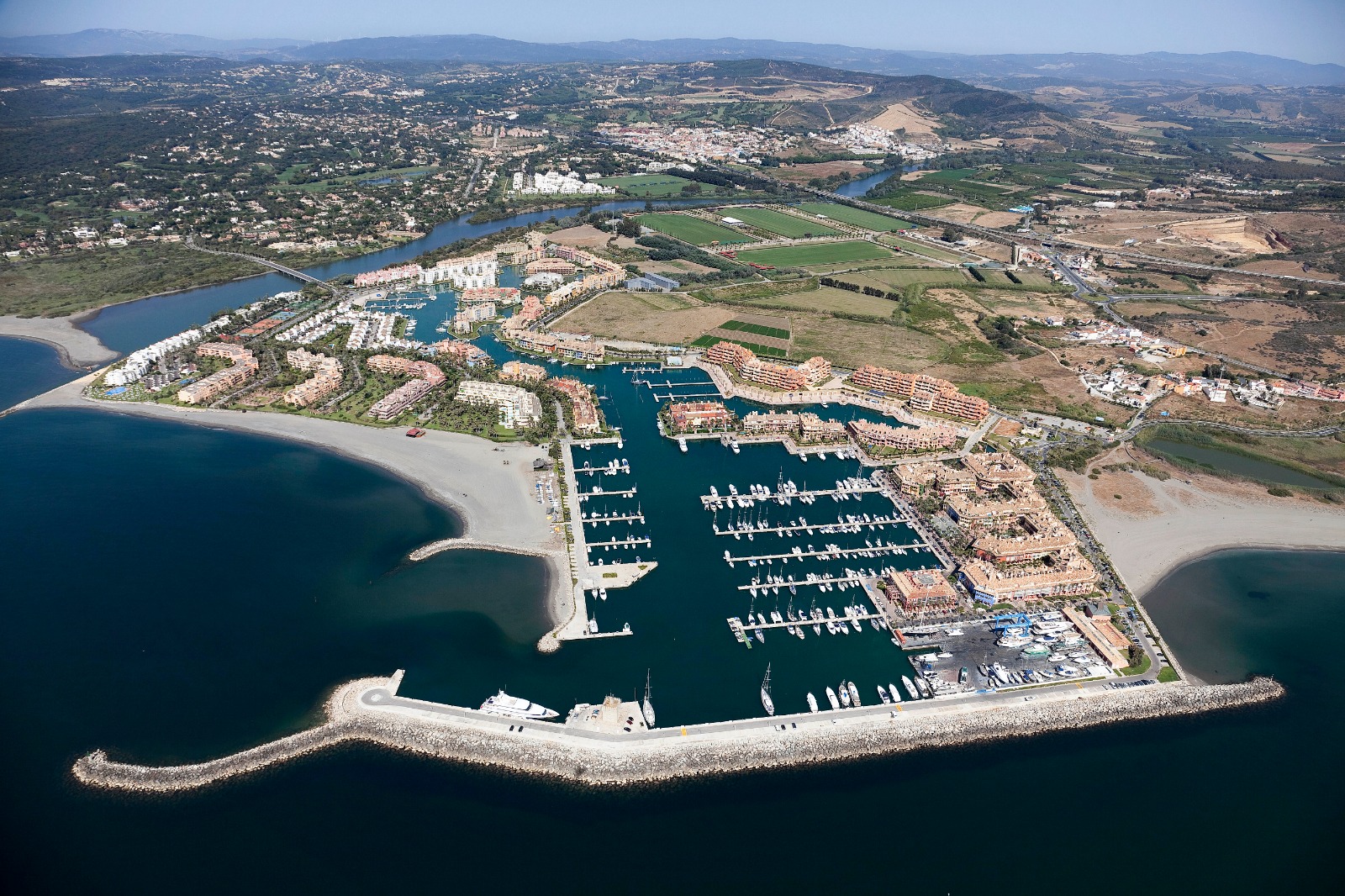
October used to be when the gates at Sotogrande closed. The polo ponies went back to Argentina, the yachts left Puerto Sotogrande, and La Cañada shopping centre ran at perhaps 30 percent capacity until Easter. I remember driving through here as a teenager and feeling like I had entered a film set with no crew. That is not what happens in October 2026. The restaurants on the port are full on a Tuesday night. The international school car parks are busy at 8am. The construction cranes, visible from the AP-7, are not pointing at holiday apartments.
What changed, and why is it happening now?
Several forces converged at the same time, and Sotogrande was positioned to capture all of them. The buyers who drove Marbella’s Golden Mile past €12,000 per m2 started looking at where the next rational move was. Sotogrande, with its lower base price, its scale of infrastructure, and a genuinely different lifestyle, landed in that conversation.
The more interesting driver is demographic rather than financial. Northern European families, particularly from the UK, Germany and Scandinavia, are not buying second homes the way their parents did. They are buying primary or semi-primary residences with school-age children in tow. A couple buying a place to visit in August does not care about the quality of the IB curriculum. A family spending September to June here while keeping a flat in London or Munich cares enormously.
Sotogrande International School, which sits inside the urbanisation on a campus most English boarding schools would envy, now has more than 1,300 pupils. The school says several year groups are close to full and it is moving towards waiting lists for boarding. It is building a new block with 20 additional secondary classrooms, a senior common room and expanded primary facilities, and bringing its nursery onto the main site. Families are buying property specifically within a short drive of the school gates. That was not true fifteen years ago.
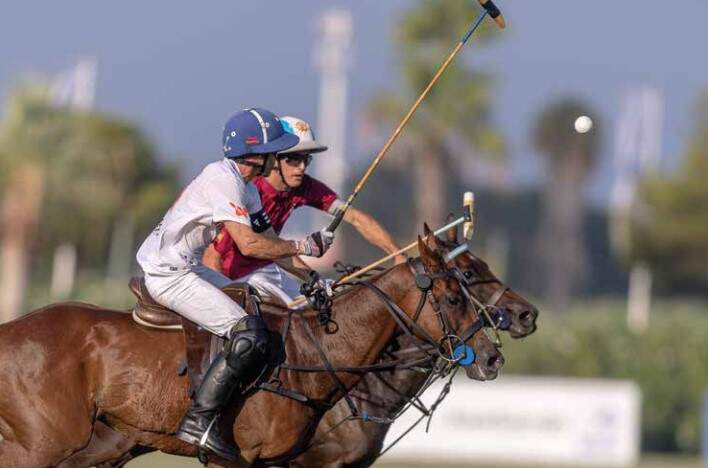
The polo ecosystem is a second, underappreciated driver. Santa María Polo Club runs international tournaments through the summer, but the training and competition calendar extends well beyond that. The facilities around Sotogrande Alto attract equestrian families who need to stable horses year round. A family with four polo ponies is not taking the weekend flight back to Stockholm. They are building a life here.
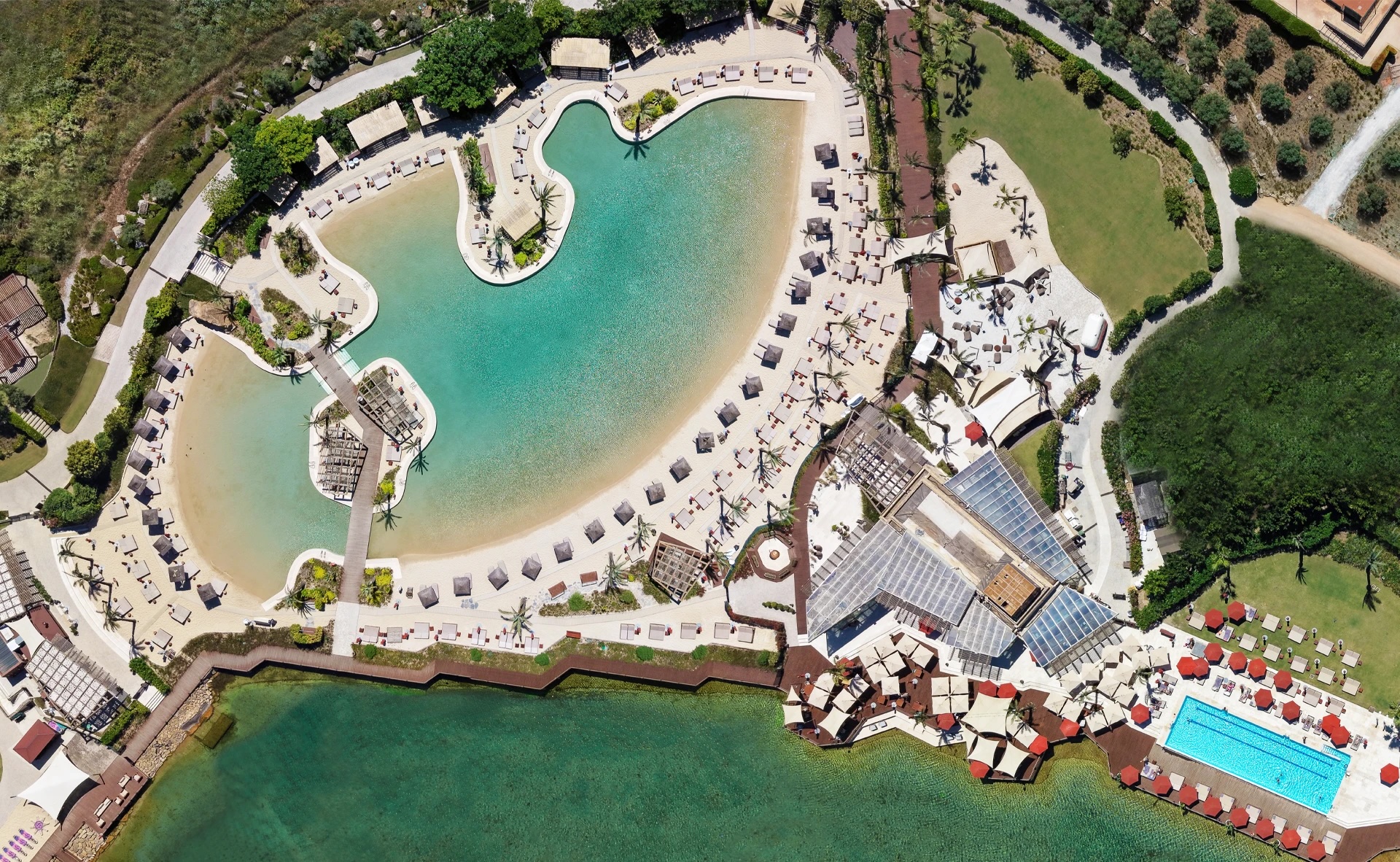
Golf is the third. The 2026 Top 100 Golf Courses ranking for Spain puts Real Club Valderrama at number one, Real Club de Golf Sotogrande at number two and La Reserva Club at thirteen, and Golf Digest gave La Reserva its highest ever Spanish placing at sixth. The former Almenara course has reopened as The Alto Club at SO/ Sotogrande, with an academy led by former Solheim Cup captain Suzann Pettersen, a Toptracer range, and a new nine-hole course due to be fully open by late summer 2026. No other urbanisation in Spain has that concentration of courses inside its own gates.
Privacy and scale matter too. Marbella offers glamour and density. Sotogrande offers 2,000 hectares of mostly gated, low-density development with mature pine forests and a port that functions at a human scale. For families who have already lived in Monaco or central London, the proposition is not excitement, it is space and discretion.
The estate is also getting easier to use for people who are not scratch golfers. In September 2026 The Alto Club, the former Almenara, opened a 9-hole par 3 course with green fees from €27, the first course in Sotogrande with a price a beginner or a family can pay without thinking.
What does the property market actually look like in October 2026?
The Sotogrande market is more segmented than most buyers realise. Understanding the zones is the first piece of real homework. Our guides to La Reserva, Sotogrande Alto, Sotogrande Costa and the marina go into each one in detail. The short version follows.
La Reserva is the premium address. It is the gated development by Cerro del Viento with its own beach club, sports facilities and a design language closer to a members’ club than a residential estate. Villa stock here runs between €5,500 and €7,000 per m2, with the top of that range for new builds with panoramic sea views. A 400 m2 villa on a 2,000 m2 plot is a €2.5 to €3 million conversation. The newest release is Las Villas Sotogrande, 26 villas listed in July 2026 from €1.01 million to €2.2 million, which is the realistic entry point for new product in La Reserva today.
Sotogrande Alto, around the polo fields and the horse infrastructure, runs €3,500 to €4,500 per m2 for quality detached houses. Plots are larger, often 3,000 to 5,000 m2, and the architecture is mixed: tired 1980s villas sit next to very well executed modern renovations. A tired 450 m2 villa on a large plot might be acquirable at €1.6 to €1.9 million and be worth €2.8 to €3.2 million renovated, depending on execution. Those margins are not guaranteed, but the spread exists.
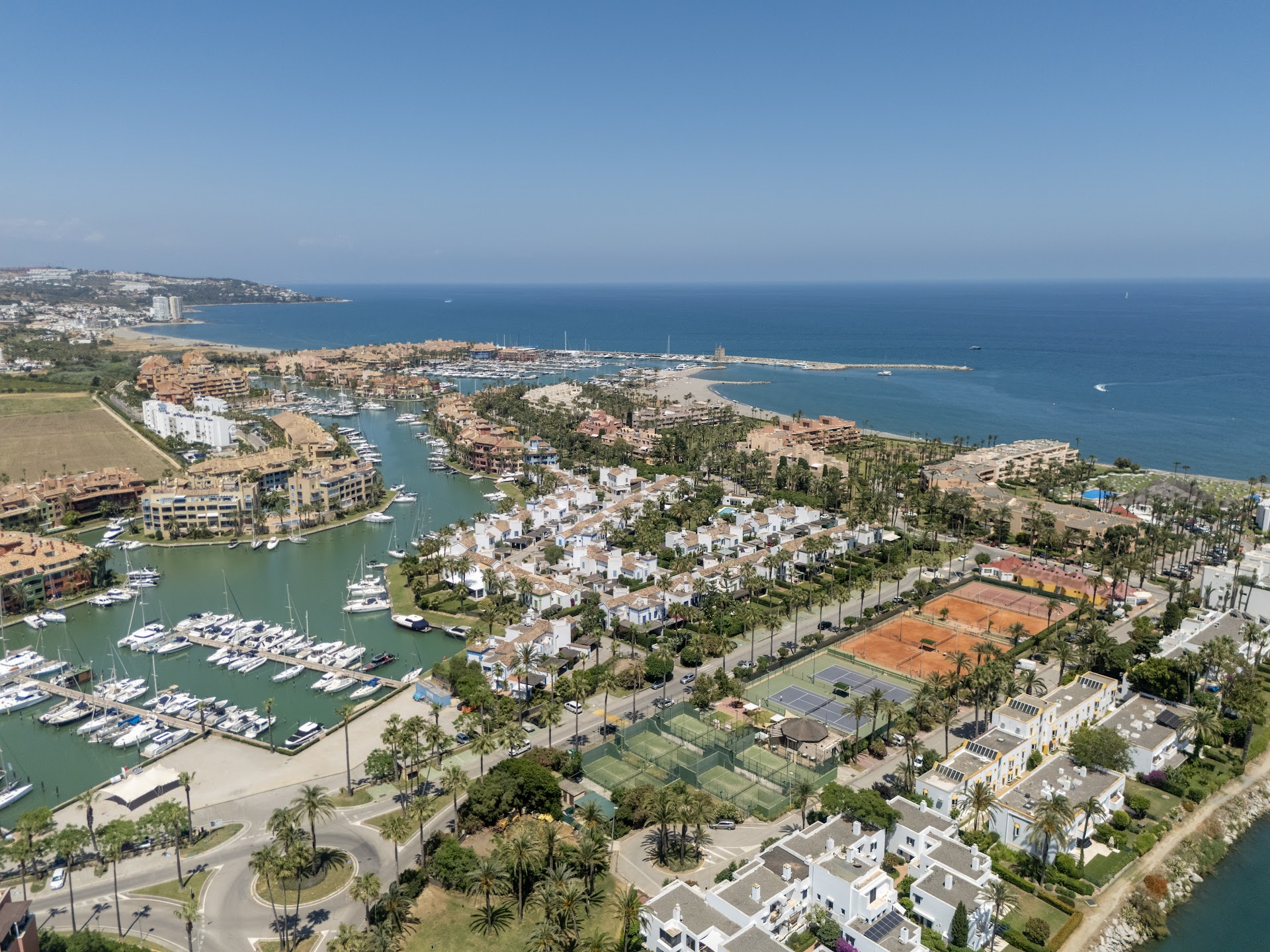
Sotogrande Costa, the older zone by the port and the beach, is the most varied, from €2,800 to €5,000 per m2 depending on condition and distance to the water. The port area carries a premium for walkability, which is unusual here because the urbanisation was designed around the car. Village Verde, from €850,000, is the main new apartment product in this part of Sotogrande.
| Zone | Price per m2 | Typical plot | Profile |
|---|---|---|---|
| La Reserva | €5,500 to €7,000 | 2,000 m2 and up | Premium, mostly new-build |
| Sotogrande Alto | €3,500 to €4,500 | 3,000 to 5,000 m2 | Renovation opportunities, horses |
| Sotogrande Costa | €2,800 to €5,000 | Mixed, generally smaller | Walkable port area |
| Marbella (for comparison) | €9,007 resale villa median | Varies, generally smaller | Established, high liquidity |
A check against the whole market, not just our view of it. On 6 October 2026 the Inmobalia network listed 132 properties for sale across Sotogrande. The median asking price for a resale villa was €4,356 per m2, with the middle half of the market between €3,557 and €6,530. Resale apartments asked a median €3,931 per m2. New-build villas asked €5,816. In Marbella, with 1,200 listings in the same feed, resale villas asked a median €9,007 per m2 and resale apartments €6,683. Those are asking prices, not sold prices, and the Sotogrande sample is small, so read them as a direction rather than a valuation. The direction is clear: Sotogrande villas sit at roughly half of Marbella’s asking level.
New development supply remains constrained. Unlike the Estepona corridor, where planning has been relatively permissive, Sotogrande operates within tighter parameters. Las Villas Sotogrande and Village Verde are the only two new schemes on our books here, against twelve in Manilva alone. The supply constraint is structural, which matters for anyone thinking about a five-year hold.
Sotogrande versus Marbella: where do the investment numbers actually land?
I get asked this constantly and I think most people approach it wrong. They frame it as a lifestyle question when it is two separate investment theses with different risk and return.
Marbella, specifically the Golden Mile and Nueva Andalucía, trades at a premium that reflects deep liquidity, global brand recognition and nearly 15 years of consistent appreciation. Resale villas across Marbella ask a median €9,007 per m2 in our feed, and prime Golden Mile stock goes well above that. Gross rental yields for well-managed stock in the short-term pool run 4 to 6 percent. You are buying proven, and you pay for it. Our Marbella mid-year market report covers that side in detail.
Sotogrande is a different bet. You are buying at roughly half of Marbella’s villa asking price, in an urbanisation that has the infrastructure, the school and the lifestyle to support genuine convergence over time. If you believe the permanent resident trend is structural rather than cyclical, the yield-plus-appreciation case is more interesting. Gross yields in La Reserva for managed holiday lets run around 4 to 5.5 percent, comparable to Marbella net of the lower entry cost. The upside, if the market re-rates Sotogrande closer to premium Costa del Sol pricing over five to seven years, is asymmetric in a way Marbella at current prices is not.
The honest caveat is liquidity. Sotogrande is a thinner market. If you need to exit quickly, you are working with a smaller buyer pool than Marbella. For a buyer with a three-year horizon or less, that matters. For a buyer with a seven-year horizon and genuine flexibility, the discount argument is solid.
The connections are improving in ways the price data has not fully reflected. Málaga airport at under 90 minutes works for a weekly commuter. Gibraltar airport is 20 minutes away, and the Gibraltar border treaty removes the friction that used to make it a gamble. Puerto Sotogrande ranked fifth largest marina in Spain this year. The buyer who can run their life on two flights a week has a workable setup here in a way that was harder to argue five years ago.
One more point most agents will not volunteer: Sotogrande’s community fee structure and urbanisation governance are well run compared to many Costa del Sol developments. The roads inside the gates are maintained. The security works. For families from Northern Europe who expect public services to function, the operational reality here is less of a shock than in some Marbella developments where community governance has been chaotic. For a family making a €2 million decision, that is not a small thing. The regulatory picture is shifting too: communities can now vote to restrict holiday rentals, which in a well-governed urbanisation is a feature, not a threat, for permanent residents.
The story Sotogrande is writing in 2026 is not a summer story anymore. The families arriving with school-age children and horses and long-term plans are writing something with a longer arc. Whether the price data catches up in three years or seven, I do not know. The direction is not ambiguous.
Frequently asked questions
How much does property cost in Sotogrande in 2026?
It depends on the zone. La Reserva runs €5,500 to €7,000 per m2, Sotogrande Alto €3,500 to €4,500, and Sotogrande Costa €2,800 to €5,000 depending on condition and distance to the port. Across all zones, resale villas asked a median €4,356 per m2 in October 2026. There is no single Sotogrande price. There are three markets under one name.
Is Sotogrande cheaper than Marbella?
Yes, by roughly half for villas. Sotogrande resale villas asked a median €4,356 per m2 in October 2026 against €9,007 in Marbella, on asking prices from the Inmobalia network. You get comparable infrastructure and a school that took decades to build at a fraction of Marbella’s entry price.
What is driving demand in Sotogrande right now?
Three things. Northern European families relocating with school-age children rather than visiting in August, with Sotogrande International School at over 1,300 pupils and expanding. The polo and equestrian community buying large plots in Sotogrande Alto. And buyers priced out of Marbella looking one valley over, helped by the Gibraltar border treaty and three golf courses in Spain’s top 13.
Is Sotogrande a good long-term property investment?
For a buyer with a five to seven year horizon, I think so. Premium supply is structurally constrained, with only two new schemes on our books, and the permanent resident trend looks durable. The tradeoff is liquidity. Sotogrande is a thinner market than Marbella, so exits take longer if you need to sell fast.
Which Sotogrande zone should I buy in?
Choose La Reserva if you want turnkey and do not mind the premium. Choose Sotogrande Alto if you are comfortable with a renovation project and want space for horses. Choose Sotogrande Costa if you want to walk to the port and are willing to take on older stock.
 English
 Spanish
 Dutch
Dutch French
 Polish
 Swedish
 German