
 ES
ES NL
NL FR
FR PL
PL SV
SV DE
DE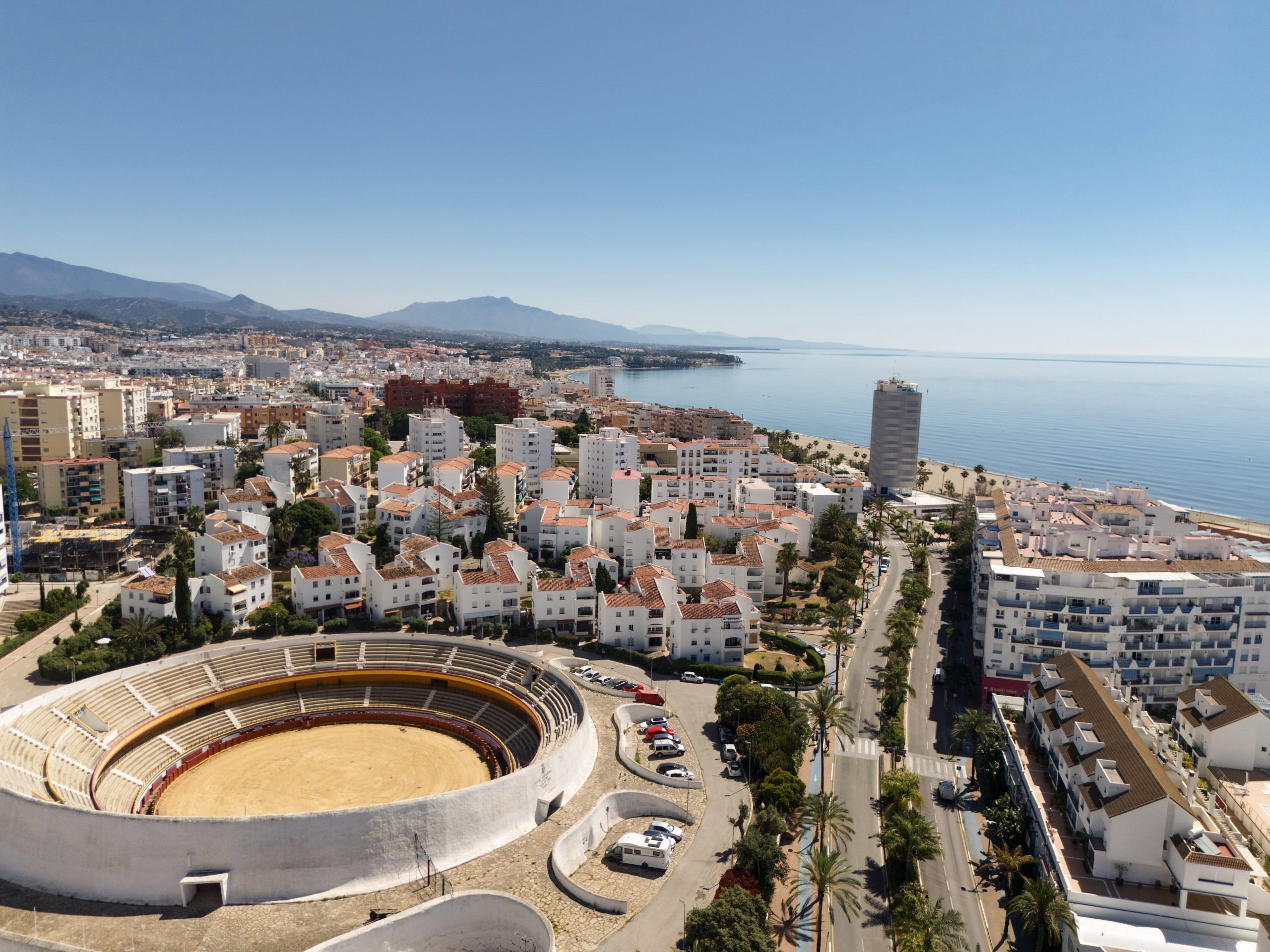
On September 11, Estepona becomes the centre of world cycling. Stage 19 of the 2026 Vuelta a España climbs to Peñas Blancas in Estepona, deep in the Sierra Bermeja, and locals here have been talking about little else for weeks. If you live in the area or you’ll be visiting that week, here’s what you need to know so you don’t miss it.
What Stage 19 Is and Why It Matters So Much in Estepona
The stage leaves Vélez-Málaga on Friday, September 11, with a neutralised start at 11:50am, and covers 210.8 kilometres to the summit at Peñas Blancas. The finish is expected around 5:14pm, according to the race organisers’ official data.
This is not just any stage. It falls in the third week of the race, the stretch that usually decides who wins the Vuelta, and the profile of the final climb makes it one of the most anticipated moments of the entire 2026 edition. The Vuelta got underway in Monaco on August 22 and Stage 19 lands with barely two stages left before the race finishes in Granada on September 13, meaning the general classification will likely still be very much alive when the peloton reaches Estepona.
The Route: From Vélez-Málaga to the Gates of Estepona
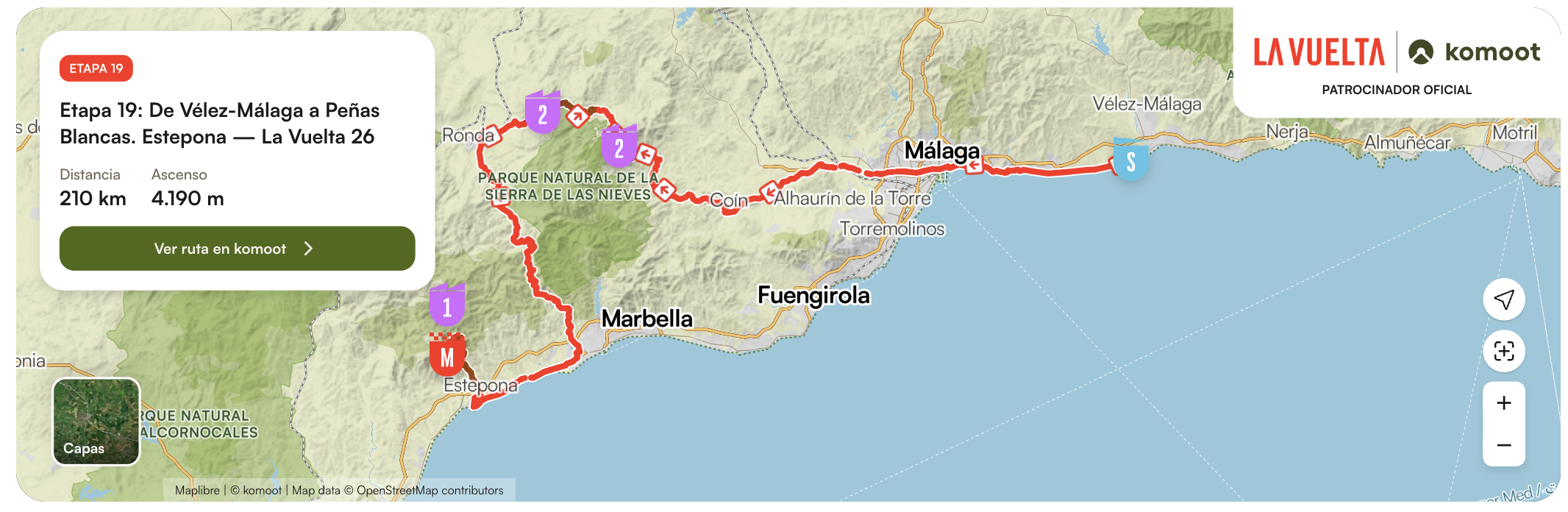
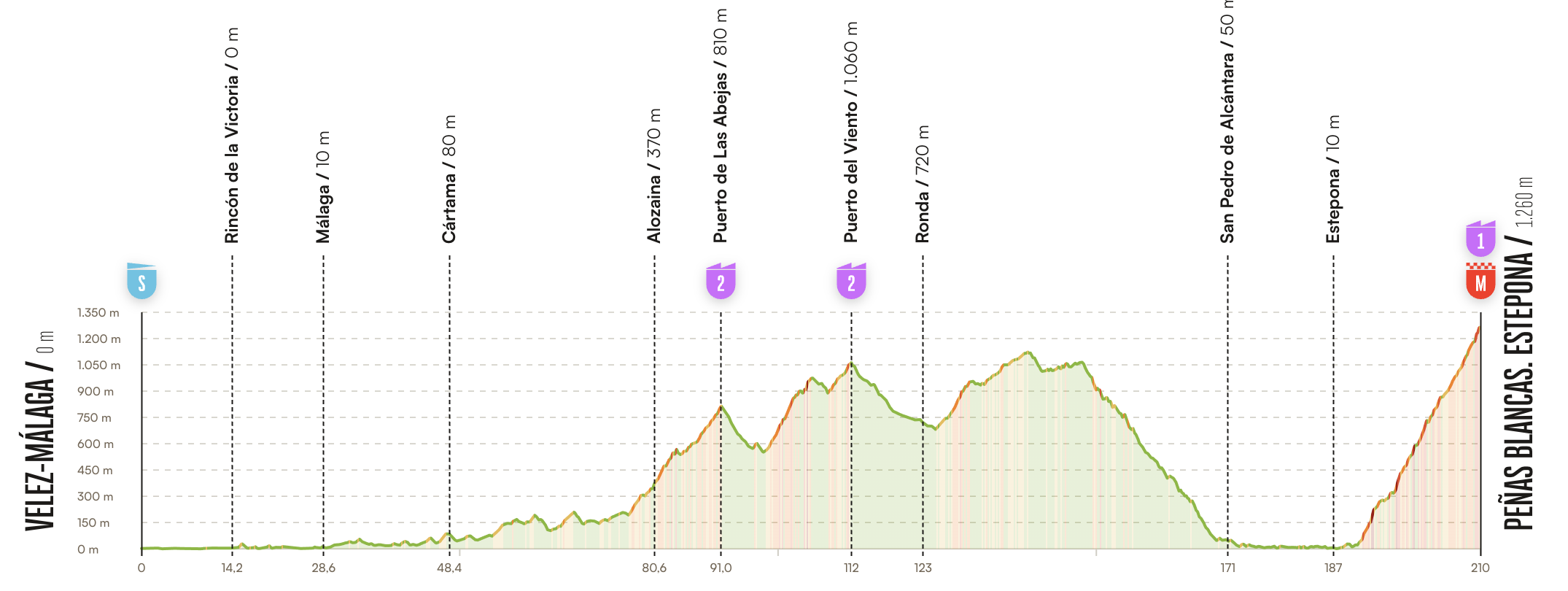
The peloton crosses a large part of Málaga province before it gets here, passing through the provincial capital, Cártama, Coín, Alozaina, Yunquera, El Burgo and Ronda, with two second-category climbs along the way, the Puerto de las Abejas and the Puerto del Viento, that start wearing riders’ legs down early.
From Ronda, the road drops toward the coast and enters Estepona through the New Golden Mile, tracking the coastline before turning inland to tackle the final climb. It’s in that last stretch, between the sea and the mountain, that the stage changes character completely.
Peñas Blancas Estepona: The Climb That Decides the Queen Stage
The final ascent runs 18.7 kilometres at an average gradient of 6.5 percent, with more than 1,200 metres of accumulated elevation gain, rated a first-category climb. According to the profile published by the organisers, the opening kilometres are the toughest section of the whole climb.
This will be the third time the Vuelta has finished atop Peñas Blancas. The first was in 2013, when it became the first high-mountain finish in the history of Málaga province. The second was in 2022, with a duel between Richard Carapaz and Wilco Kelderman decided in the final metres in the Ecuadorian’s favour, one of the most memorable finishes of that edition. Estepona already knows what it’s like to host a big mountain finish, and this time it comes in the thick of the third week, with the general classification still open and teams forced to lay everything on the table before the race is over.
The two precedents make clear why riders approach this climb with respect. It isn’t just the length or the elevation gain, it’s that Peñas Blancas tends to show up exactly when legs are already spent, deep into a three-week race, which turns any attack here into something decisive.
The Best Spots to Watch the Stage Live
There are three distinct ways to experience the stage, depending on what you’re after. If you want village atmosphere, the passage through central Estepona and along the coastal stretch is the easiest option, with the peloton moving fast and little waiting time.
If you’d rather feel the mountain, the opening kilometres of the Peñas Blancas climb usually carry the liveliest atmosphere, with fans walking or cycling up from early morning and camping roadside with flags and horns. It’s the part of the route where the passion for cycling in this area shows most.
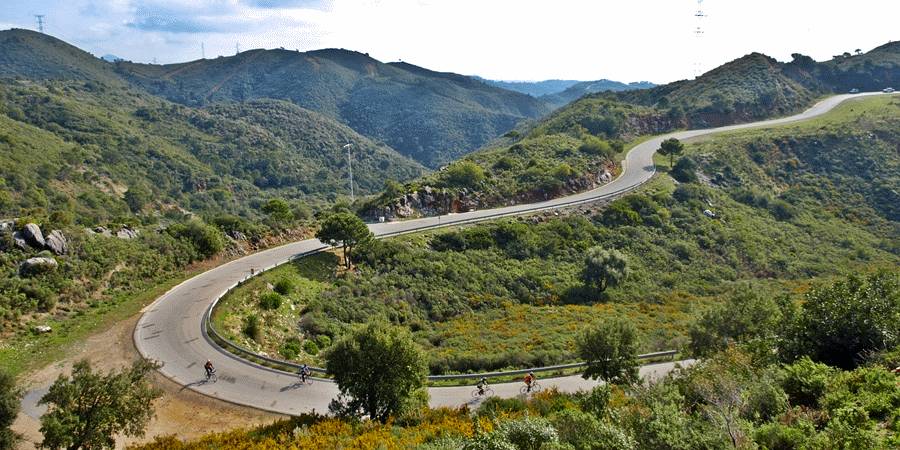
And if the finish is what you’re after, the finish line zone at Peñas Blancas is where the stage gets decided, though access is more demanding, you need to head up with plenty of time, and capacity is limited according to whatever the organisers confirm. Whichever you choose, give yourself margin. Roads close to traffic several hours before the race passes, see the full closure schedule below.
If you’d rather follow the stage without heading up the mountain, central Estepona and the Puerto Deportivo are a good option. The marina in particular has one of the best selections of bars and terraces in town, many with screens for the sport, and it’s a pleasant place to spend the afternoon with sea views while the race works its way through the sierra. As tends to happen with events like this, the town hall will likely confirm official screening points in the days before, as it did during the World Cup. Worth following their channels that week so you don’t miss any last-minute announcements.
Road Closures and Traffic on September 11
Estepona town hall has confirmed a special traffic and security plan for the day. Roads along the route will be restricted from 1:30pm to 6:30pm, with the peloton expected to pass through the town centre between 3pm and 5pm, though that window can shift depending on how the stage unfolds and instructions from the Guardia Civil and race organisers.
The route through town runs: entry from the A-7 (Marbella–Estepona direction, exit at km 1,067), Avenida Litoral, Avenida de España, Paseo Marítimo Pedro Manrique, Avenida de España again, Avenida del Carmen, Avenida Puerta del Mar, Rotonda Cibernética, Calle Ricardo Ortega, Plaza San Fernando, Calle San Fernando, Avenida Andalucía and Avenida de Los Reales, before climbing the MA-8301 toward Peñas Blancas / Los Reales.
If you’re driving that day, move your car out of the marked route well before 1:30pm and plan an alternative way around, town hall has asked residents to expect delays and follow traffic officers’ directions. Estepona’s nursery schools and infant/primary schools will finish the day at 1pm to help ease traffic before the closures start.
There’s a bit of a party built in too. The town hall is giving away 3,000 commemorative t-shirts from midday at three points around town, outside the town hall itself and at the start of Calle Terraza on Avenida España. There’s also a Fan Zone with event stands set up on Avenida España, between the children’s play area and Calle Delfín.
Following the General Classification
With Stage 19 landing so late in the race, the state of the general classification on the day will shape everything, from how hard the break is allowed to go up the road to whether the overall favourites mark each other all the way to the line. Rather than print a snapshot here that will be outdated within days, the most reliable place to check who’s wearing red, and by how much, is La Vuelta’s official live rankings page, which updates after every stage with the general, points, mountains and young rider classifications.
Practical Tips for Race Day
September in Estepona is still hot, and spending hours in the sun waiting for the race to pass takes a bit of planning.
- Leave home early. The best spots fill up hours in advance, especially the opening kilometres of the climb.
- Bring plenty of water and some shade, a cap or similar, since the Peñas Blancas road has little natural cover.
- If you’re walking or cycling up, build in extra time. It’s more than 18 kilometres of climbing and midday heat doesn’t let up.
- Move your car before 1:30pm if it’s parked along the route, roads close from 1:30pm to 6:30pm and stay closed until the last of the field has passed.
One Stage, a Showcase for the World
For a few hours, television cameras around the world will show Estepona and the Sierra Bermeja exactly as they are, sea behind and mountain ahead. This isn’t the first time the area has become an international showcase, and it probably won’t be the last.
That exposure isn’t a coincidence. It’s the same combination of coast and mountain, a town with real character, and new developments in Estepona, that has drawn international buyers to this part of the Costa del Sol for years. Watching the stage pass through here is, in a way, also seeing why so many people decide to stay, and why so many properties in Estepona keep changing hands among buyers who knew the town long before the Vuelta ever arrived.
Questions People Are Asking
When is Stage 19 of the 2026 Vuelta in Estepona?
The stage runs on Friday, September 11, 2026, starting in Vélez-Málaga and finishing at Peñas Blancas, in the municipality of Estepona.
How long is the climb to Peñas Blancas?
The final climb runs 18.7 kilometres at an average gradient of 6.5 percent and is rated a first-category ascent.
Is this the first time the Vuelta has climbed Peñas Blancas?
No. It’s the third time, after 2013, when it became the first high-mountain finish in Málaga province, and 2022, when Richard Carapaz won.
What time is the finish expected?
Organisers estimate the finish around 5:14pm, though the timing can shift slightly depending on how the race unfolds.
Where will roads close in Estepona?
Roads along the route close from 1:30pm to 6:30pm on September 11. The peloton is expected through the town centre between 3pm and 5pm, following the A-7, Avenida Litoral, Avenida de España, the Paseo Marítimo Pedro Manrique, Avenida del Carmen, Avenida Puerta del Mar, Rotonda Cibernética, Plaza San Fernando and Avenida de Los Reales before climbing the MA-8301 to Peñas Blancas.
Where can I check the current Vuelta standings?
La Vuelta’s official rankings page updates after every stage with the general, points, mountains and young rider classifications, and is the most reliable source since standings change daily during the race.
Estepona has plenty else going on this year: Hospiten has expanded its eye unit, and the town has broken ground on a new velodrome, football and rugby complex. If cycling isn’t your sport, here’s where to watch football instead. And if you follow endurance sport, IRONMAN 70.3 has moved from Marbella to Málaga for its October 18, 2026 race.
 English
 Spanish
 Dutch
Dutch French
 Polish
 Swedish
 German