
 ES
ES NL
NL FR
FR PL
PL SV
SV DE
DE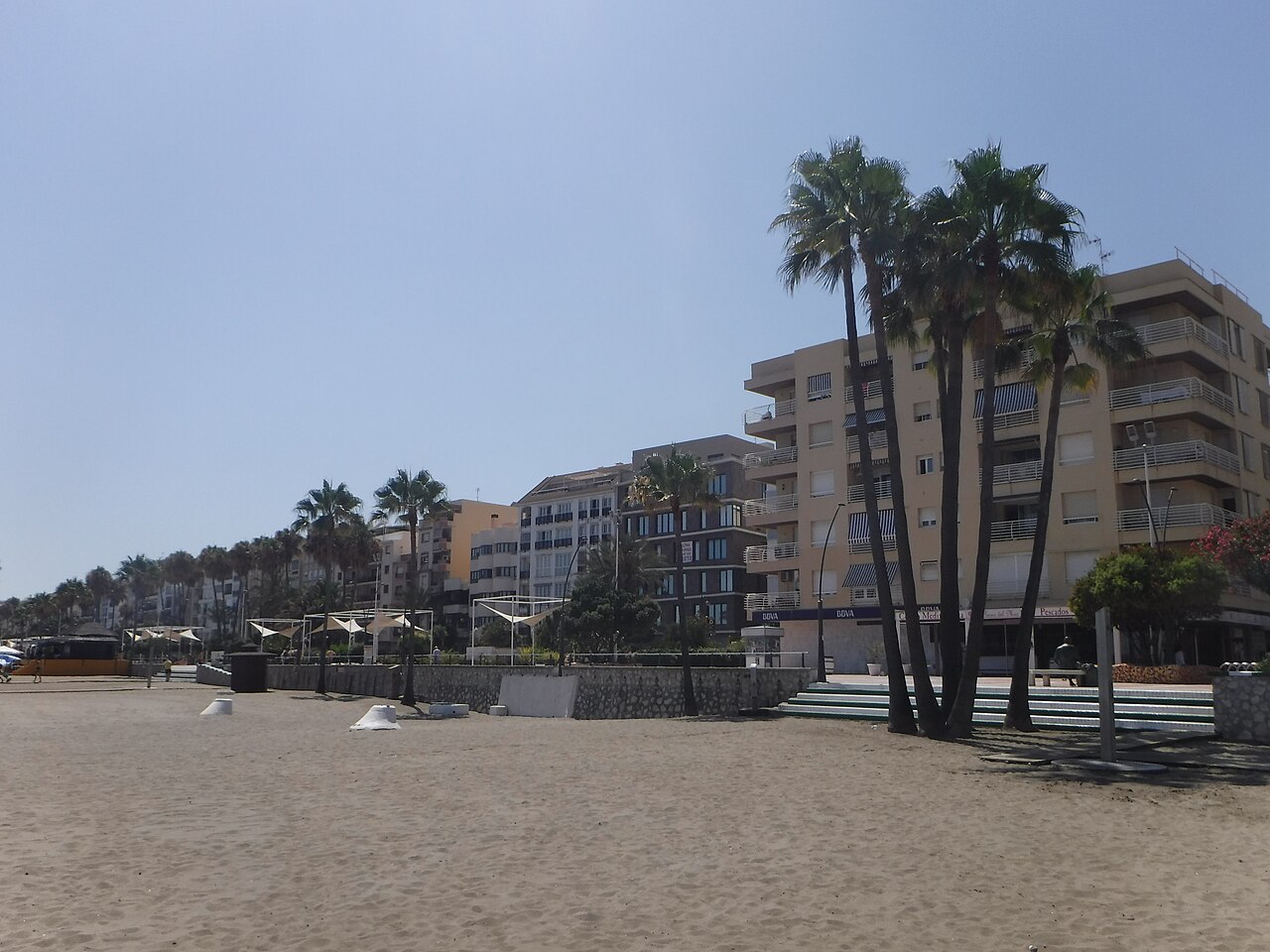
What nobody else on page 1 tells you is what sits behind each beach. The person choosing a beach is often choosing where to live, so for every beach I have added the neighbourhoods behind it with real walking times from our own area guides.
Estepona beaches in numbers
| Beaches | 16, in three zones: East 9, Centre 2, West 5 (turismo.estepona.es) |
| Coastline | About 21 km, from Casasola on the Marbella side to La Galera on the Manilva side |
| Town beaches | La Rada (2.6 km, with the promenade) and El Cristo (680 m cove by the port) |
| Lifeguards, summer 2026 | 5 beaches: La Rada, El Cristo, El Padrón, El Saladillo and Arroyo Vaquero. 15 June to 15 September, 12:00 to 20:00. 47 people, 17 towers, an ambulance with nurse and a rescue boat |
| Assisted bathing | Free at La Rada and El Cristo, same hours as the lifeguards |
| Blue Flags 2026 | No beach. Only the Estepona marina, for the 32nd year |
| Sand | Dark everywhere. Fine sand at La Rada, sand mixed with gravel or small pebbles on most of the others |
| Most reviewed on Google | El Cristo, 4.3 from 5,884 reviews. La Rada 4.4 from 2,465 |
How beaches work here if you are new
Lifeguard season
The town hall runs lifeguards from 15 June to 15 September, every day from 12:00 to 20:00, on five beaches only: La Rada (8 in the water and 4 on land), El Cristo (3 and 1), El Padrón, El Saladillo and Arroyo Vaquero (2 and 1 each). Outside those dates and on the other eleven beaches there is nobody watching, so swim where you can stand and keep an eye on the flags where there are flags. The 17 towers are new since 2025.
Blue Flags
For 2026 the official list from ADEAC, the body that awards Blue Flags in Spain, has no Estepona beach on it. Casares, Manilva and Marbella all have awarded beaches. The Estepona marina kept its flag. Several websites still say Estepona has four Blue Flag beaches. That is out of date.
Sand and water
The sand is dark on every beach. La Rada has fine grey sand. On most of the others it is sand mixed with gravel or small pebbles, especially at the waterline. It is not the white powder of the postcards. It holds heat, it does not blow around much, and children do not seem to mind. The water is calm at La Rada and El Cristo, which face into the bay. The beaches east and west of town get a moderate swell on windy days.
Chiringuitos, sunbeds and showers
La Rada, El Cristo, El Saladillo, El Padrón, Casasola and Guadalmansa have beach bars and sunbed hire in summer. Showers and toilets follow the same pattern. The quiet beaches west of town (Guadalobón, Bahía Dorada, La Galera) have no services at all, so bring water.
Getting there and parking
Every beach is reached from the old N-340 coast road, now the A-7, and the interurban bus stops along it. Parking is free and unguarded at every beach. Some car parks are tiny: Arroyo Vaquero has 20 to 30 spaces, Bahía Dorada about 20. The road access to the stretch between El Velerín and Arroyo de las Cañas is closed to cars, you walk in from the Cañas side.
Dogs
Not on these beaches in the bathing season. Our Dog-Friendly Costa del Sol post lists every dog beach from Casares to Marbella, so I will not repeat it here.
The Senda Litoral
The coastal path runs along most of these beaches and is the easiest way to see several in one morning. Our Senda Litoral post covers the route from Manilva to Marbella.
Which beach suits you?
- Children and calm water: El Cristo, then La Rada.
- Everything within walking distance, promenade, chiringuitos, water sports: La Rada.
- Space and few people, with services: El Saladillo, Casasola.
- Escaping the summer crowds completely: Guadalmansa, El Velerín, Del Castor, Guadalobón.
- Quiet with a lifeguard: El Padrón, Arroyo Vaquero.
- Snorkelling and rocky seabed: La Galera, Bahía Dorada, Arroyo Vaquero.
- Naturist: Costa Natura.
- Accessibility: La Rada and El Cristo (assisted bathing), El Padrón (disabled parking and adapted changing rooms).
All beaches at a glance
| Beach | Zone | Length | Sand | Lifeguards 2026 | Best for | Neighbourhoods behind it |
|---|---|---|---|---|---|---|
| Casasola | East | about 2 km | sand, pebbles, gravel | No | Space, swimming, dunes | Casasola (1 to 5 min walk), Atalaya (5 min drive) |
| El Saladillo | East | about 2.5 km | sand, pebbles, gravel | Yes | Families, services, shade | Costalita-Saladillo (direct), Bel Air (5 to 8 min walk), Atalaya |
| Guadalmansa | East | about 2.5 km | sand, pebbles, gravel | No | Long walks, kitesurf | Guadalmansa (1 to 3 min walk), Paraíso Barronal (2 to 8 min walk), Selwo (5 min) |
| Playa Bella | East | not measured | sand and gravel | No | Low key, relaxed | Cancelada (8 to 10 min walk or 3 min drive) |
| El Velerín | East | not measured | sand and gravel | No | Pines, isolation | El Velerín (direct) |
| Del Castor | East | about 900 m | sand and pebbles | No | Quiet, between two rivers | El Velerín, Cancelada (short drive) |
| El Padrón | East | about 1.2 km | sand and pebbles | Yes | Weekday quiet, accessibility | El Padrón (on the doorstep) |
| Punta Pinillos | East | not measured | sand and gravel | No | A quiet spot next to La Rada | Huerta Nueva and Los Llanos, at the east end of the La Rada promenade |
| Punta de la Plata | East | about 2.3 km | sand and gravel | No | Long, narrow, never busy | Punta Plata (direct), Alcazaba Beach |
| La Rada | Centre | 2.6 km | fine grey sand | Yes, biggest team | Everything | Casco Antiguo (3 min walk), Puerto Estepona (3 min), Los Llanos (5 min), Huerta Nueva (8 min) |
| El Cristo | Centre | 680 m | sand and gravel | Yes | Children, calm water, shelter | Seghers (direct), Puerto Estepona (500 m), Casco Antiguo (8 min walk) |
| Arroyo Vaquero | West | about 2.5 km with Guadalobón | sand and gravel | Yes | Quiet with a lifeguard, snorkelling | Guadalobón, Valle Romano (short drive) |
| Guadalobón | West | see Arroyo Vaquero | sand and gravel | No | Low numbers all year | Guadalobón (on site), La Gaspara (short walk), La Resina (10 min hilly walk), Valle Romano (3 km) |
| Costa Natura | West | small cove | sand and gravel | No | Naturist | None directly |
| Bahía Dorada | West | about 650 m | sand and gravel, rocky | No | The colour of the water, fishing | Bahía Dorada (direct) |
| La Galera | West | about 1 km | sand and gravel, rocky | No | Small, quiet, snorkelling | Buenas Noches (short walk) |
Lengths and sand come from the national beach guide (MITECO Guía de Playas, 2015 edition, the latest), lifeguards from the town hall (15 June 2026), walking times from our own area guides. Treat the lengths as a feel for size, not a measurement.
The centre: the two town beaches
These are the beaches you walk to. Everything in Estepona town is within fifteen minutes of one of them.
La Rada
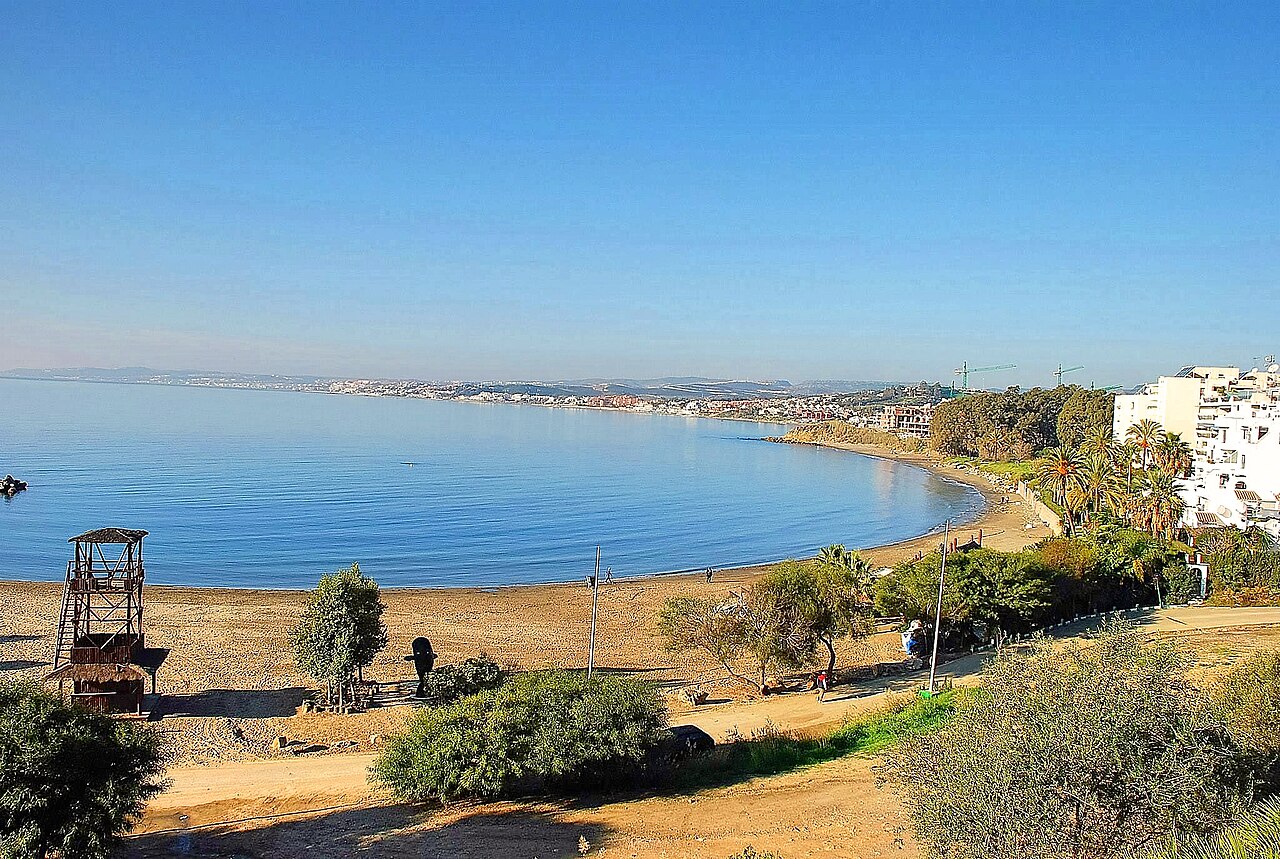
- Length: 2,630 metres (town hall), 30 to 80 metres wide. Fine grey sand, calm water, facing into the bay
- Services: toilets, showers, footwash, sunbeds and parasols, chiringuitos, water sports, children’s area, sports area, walkways. The promenade runs the full length
- Lifeguards 2026: yes, the biggest team in Estepona, 8 in the water and 4 on land. Free assisted bathing for people with reduced mobility in summer
- Getting there: on foot from anywhere in town. Free parking along the promenade, unguarded. Hospiten Estepona 7 km
- Behind it: Casco Antiguo (3 minutes), Puerto Estepona (3 minutes, at the western end), Los Llanos (5 to 10 minutes), Huerta Nueva (about 8 minutes)
- Google rating: 4.4 from 2,465 reviews
The beach you picture when you think of Estepona. The chiringuitos do paella, pescaíto frito and espetos of sardines, and some stay open late with live music at weekends. There is a posidonia meadow on the seabed of the bay, which is why the water stays clear.
El Cristo
- Length: 680 metres (town hall), 5 to 25 metres wide. Sand and gravel, calm, warm, shallow water, sheltered from the wind
- Services: toilets, showers, footwash, sunbeds, chiringuito, children’s area, trees for shade, adapted changing rooms, amphibious chairs. Disabled parking
- Lifeguards 2026: yes, 3 in the water and 1 on land. Free assisted bathing in summer
- Getting there: Avenida del Carmen, just west of the port. Free parking, fills by late morning in July and August
- Behind it: Seghers (directly above it), Puerto Estepona (500 metres), Casco Antiguo (8 minutes through the port), Los Llanos and Huerta Nueva (10 minutes)
- Google rating: 4.3 from 5,884 reviews, the most reviewed beach in Estepona
The opposite kind of beach to La Rada. A cove that works on days when La Rada is blowing sand in your face, and the one families with small children choose. Busy at weekends, so go early. Some families set up tables and chairs under the trees and stay the whole day.
East towards Marbella
Leaving the port eastwards the beaches get longer, narrower and emptier. Most sit below an urbanisation and a strip of pines. The coastal path links them.
Punta Pinillos
- Length: not measured separately, the national guide groups it with Punta de la Plata. Sand and gravel
- Services: none to speak of
- Lifeguards 2026: no
- Getting there: east end of the La Rada promenade, on foot
- Behind it: Huerta Nueva and Los Llanos, the eastern edge of town, ten minutes along the promenade
- Google rating: no separate listing
A quiet place to lie down a few hundred metres from the crowds. Most people never notice where La Rada ends and Punta Pinillos begins.
Punta de la Plata
- Length: 2,300 metres, 5 to 15 metres wide. Sand and gravel, moderate swell
- Services: bins and cleaning, that is all. No toilets, no showers, no sunbeds
- Lifeguards 2026: no
- Getting there: from the A-7, free unguarded parking, bus stop on the coast road
- Behind it: Punta Plata (direct access), Alcazaba Beach
- Google rating: 4.3 from 59 reviews
Long and narrow and never busy, because La Rada next door takes the crowds. There is posidonia on the seabed off the Padrón river mouth.
El Padrón
- Length: 1,230 metres, 10 to 40 metres wide. Sand and pebbles, moderate swell, vegetation behind the beach
- Services: toilets, showers, footwash, sunbeds and parasols, chiringuito, children’s area, sports area, all in the central stretch. Disabled parking, adapted changing rooms, showers and toilets, amphibious chairs
- Lifeguards 2026: yes
- Getting there: from the A-7 at the Padrón river, free unguarded parking, bus
- Behind it: El Padrón (on the doorstep)
- Google rating: 3.7 from 72 reviews
Very quiet on weekdays and one of only five beaches with a lifeguard, plus the best accessibility outside town. The 16th century watchtower at the river mouth is the landmark. The Padrón river is a protected site.
Del Castor
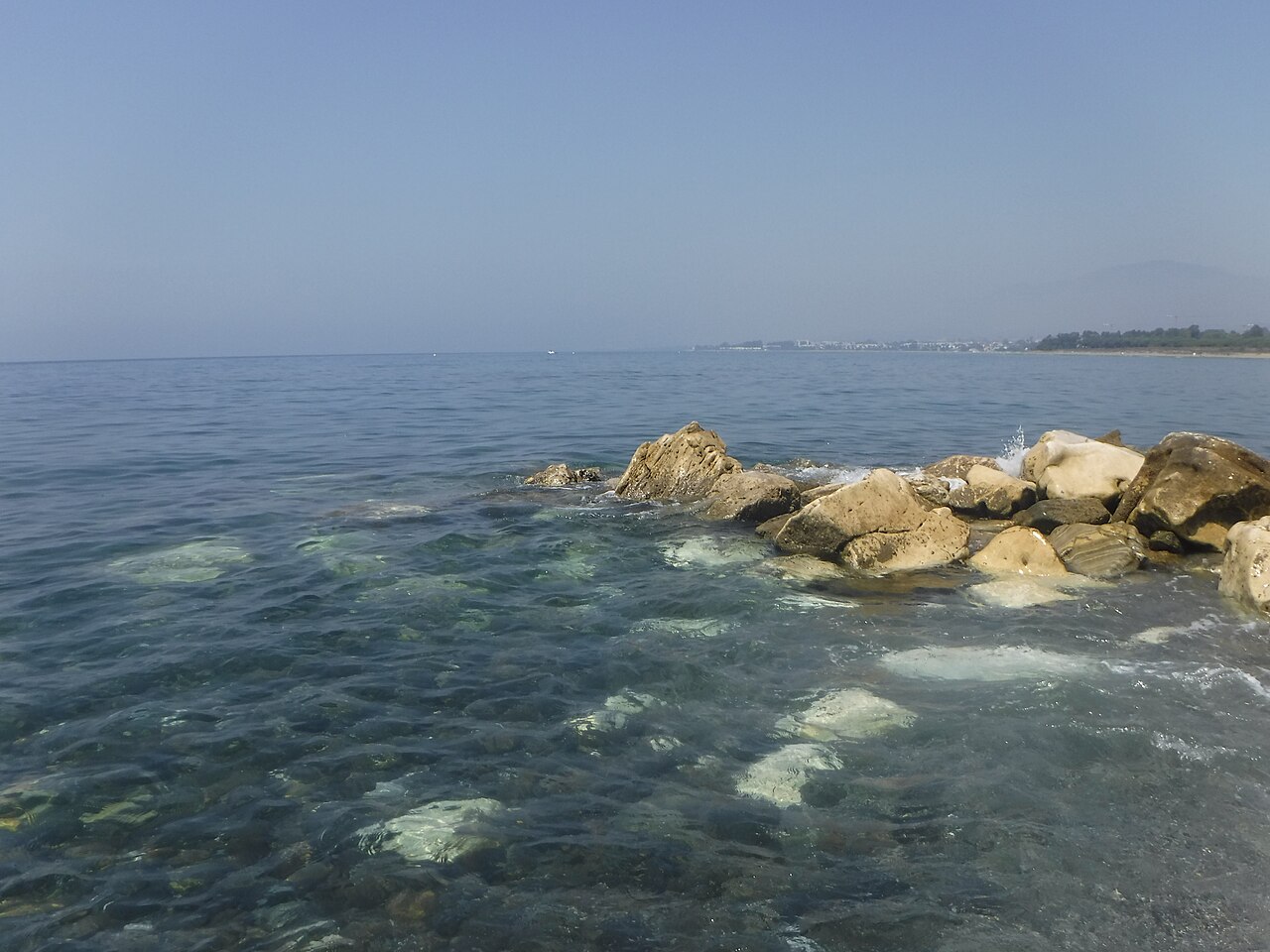
- Length: 880 metres, 25 metres wide. Sand and pebbles, moderate swell
- Services: bins and cleaning only
- Lifeguards 2026: no
- Getting there: from the A-7, free unguarded parking, bus
- Behind it: El Velerín, Cancelada (short drive)
- Google rating: 4.0 from 47 reviews
Between the Castor and Velerín rivers, with the mountains behind and a lot of native vegetation. Low numbers even in August. The Castor river is a protected site.
El Velerín
- Length: not measured separately (the national guide lists this stretch as Arroyo de las Cañas, 1,120 metres, 30 metres wide). Sand and gravel, calm water
- Services: showers, sunbeds and parasols, chiringuito
- Lifeguards 2026: no
- Getting there: on foot only. The road access is closed to cars, you walk in from the Cañas side. Bus on the coast road
- Behind it: El Velerín (direct access)
- Google rating: 4.4 from 49 reviews
Thick pine woods between the sea and the road, which is why the town hall calls it one of the most isolated beaches in Estepona. The walk in is the filter.
Playa Bella
- Length: not in the national guide. Sand and gravel
- Services: the PlayaBella restaurant on the beach (4.7 from 763 Google reviews)
- Lifeguards 2026: no
- Getting there: from the A-7 at km 162, below Cancelada
- Behind it: Cancelada (8 to 10 minute walk, or 3 minutes by car)
- Google rating: no listing for the beach itself
The beach below Cancelada. Low numbers, relaxed, and the restaurant is the reason most people know the name.
Guadalmansa
- Length: 2,500 metres, 5 to 35 metres wide. Sand, pebbles and gravel, moderate swell
- Services: showers, footwash, sunbeds and parasols, chiringuito, sports area, a kitesurf zone
- Lifeguards 2026: no
- Getting there: from the A-7, free unguarded parking, bus
- Behind it: Guadalmansa (1 to 3 minute walk), Paraíso Barronal (2 to 8 minute walk), Selwo (5 minutes)
- Google rating: 3.9 from 127 reviews
The beach for people who want to escape the summer crowds and walk for an hour. The Guadalmansa river mouth is a protected habitat, and the 10th century Moorish watchtower is the oldest on this coast.
El Saladillo
- Length: 2,500 metres (the town hall says 3 km), 10 to 40 metres wide. Sand, pebbles and gravel, moderate swell, dunes and pines behind
- Services: toilets, showers, footwash, sunbeds and parasols, chiringuitos, children’s area. Shade under the pines
- Lifeguards 2026: yes, 2 in the water and 1 on land
- Getting there: from the A-7, free unguarded parking, bus. Hospiten 4 km
- Behind it: Costalita-Saladillo (direct access), Bel Air (5 to 8 minute walk), Atalaya
- Google rating: 4.0 from 502 reviews
The wide one. Good services, a lifeguard, dunes and pines between you and the urbanisations, and the sunset terraces we wrote about in July. The dunes and the 16th century Saladillo tower are protected.
Casasola
- Length: 1,980 metres, 2 to 20 metres wide. Sand with narrow strips of gravel and pebbles, moderate swell, dunes of botanical interest
- Services: toilets, showers, footwash, sunbeds and parasols, chiringuito
- Lifeguards 2026: no
- Getting there: from the A-7 on the Marbella side, free unguarded parking, bus
- Behind it: Casasola (1 to 5 minute walk), Atalaya (5 minute drive)
- Google rating: 4.0 from 20 reviews
The last beach before Marbella and the town hall’s pick for swimming, because of the water quality and the setting. The 14th century Punta de Baños tower stands at the end.
West towards Manilva
West of El Cristo the coast gets emptier fast. These five beaches have almost no services and almost no people, which is the point.
Arroyo Vaquero
- Length: 2,500 metres shared with Guadalobón, about 15 to 30 metres wide. Sand and gravel, rocky seabed, moderate swell
- Services: sunbeds and parasols in summer, bins. No toilets or showers
- Lifeguards 2026: yes, 2 in the water and 1 on land
- Getting there: from the A-7, direct access, a car park of 20 to 30 spaces, bus
- Behind it: Guadalobón, Valle Romano (short drive)
- Google rating: 4.1 from 94 reviews
The one quiet beach on this side with a lifeguard. The rocks on the seabed make it a snorkelling spot, and the 16th century Arroyo Vaquero tower stands above it.
Guadalobón
- Length: part of the same 2.5 km stretch as Arroyo Vaquero. Sand and gravel
- Services: none
- Lifeguards 2026: no
- Getting there: from the A-7, free parking, bus
- Behind it: Guadalobón (on site), La Gaspara (500 to 800 metres), La Resina (10 minute hilly walk), Valle Romano (about 3 km)
- Google rating: 4.3 from 244 reviews
Low numbers all year round, and the view back to Estepona across the water is the one the town hall puts on its own website.
Costa Natura (naturist)
- Length: a small cove. Sand and gravel
- Services: none on the beach, the naturist resort is next to it
- Lifeguards 2026: no
- Getting there: from the A-7 at the Costa Natura urbanisation
- Behind it: none directly
- Google rating: 4.3 from 192 reviews (the resort listing)
Small, relaxed and, in the town hall’s own words, almost private. The only naturist beach in Estepona.
Bahía Dorada
- Length: 650 metres, very narrow, about 2 metres at high water. Sand and gravel, rocky, moderate swell
- Services: none, not even bins
- Lifeguards 2026: no
- Getting there: from the A-7, a car park of about 20 spaces, bus. Full promenade
- Behind it: Bahía Dorada (direct access)
- Google rating: 4.2 from 37 reviews
Known for the colour of the water, from dark green to pale blue depending on the light. People come here to fish and snorkel, not to sunbathe.
La Galera
- Length: 1,000 metres, 10 metres wide. Sand and gravel with rocky areas, moderate swell
- Services: bins and cleaning. No toilets, showers or sunbeds
- Lifeguards 2026: no
- Getting there: from the A-7, free unguarded parking, bus. Full promenade, on the Senda Litoral
- Behind it: Buenas Noches (short walk)
- Google rating: 4.3 from 87 reviews
The last beach before Manilva. Small, quiet, well kept and hardly built up compared with the rest of the coast. There is a diving area 500 metres out. The coastal path continues from here towards Sabinillas.
Living near the beach
Walking distance to a beach is not the same everywhere in Estepona. In the Casco Antiguo, Los Llanos, Seghers and the port, the beach is part of the daily routine. In Guadalmansa, Costalita, Casasola, Punta Plata, El Velerín, El Padrón, Guadalobón, Bahía Dorada and Buenas Noches, the beach is at the bottom of the urbanisation. In Cancelada, Bel Air, Atalaya, Selwo, La Resina and Valle Romano you will drive, or walk a bit further than the brochure says.
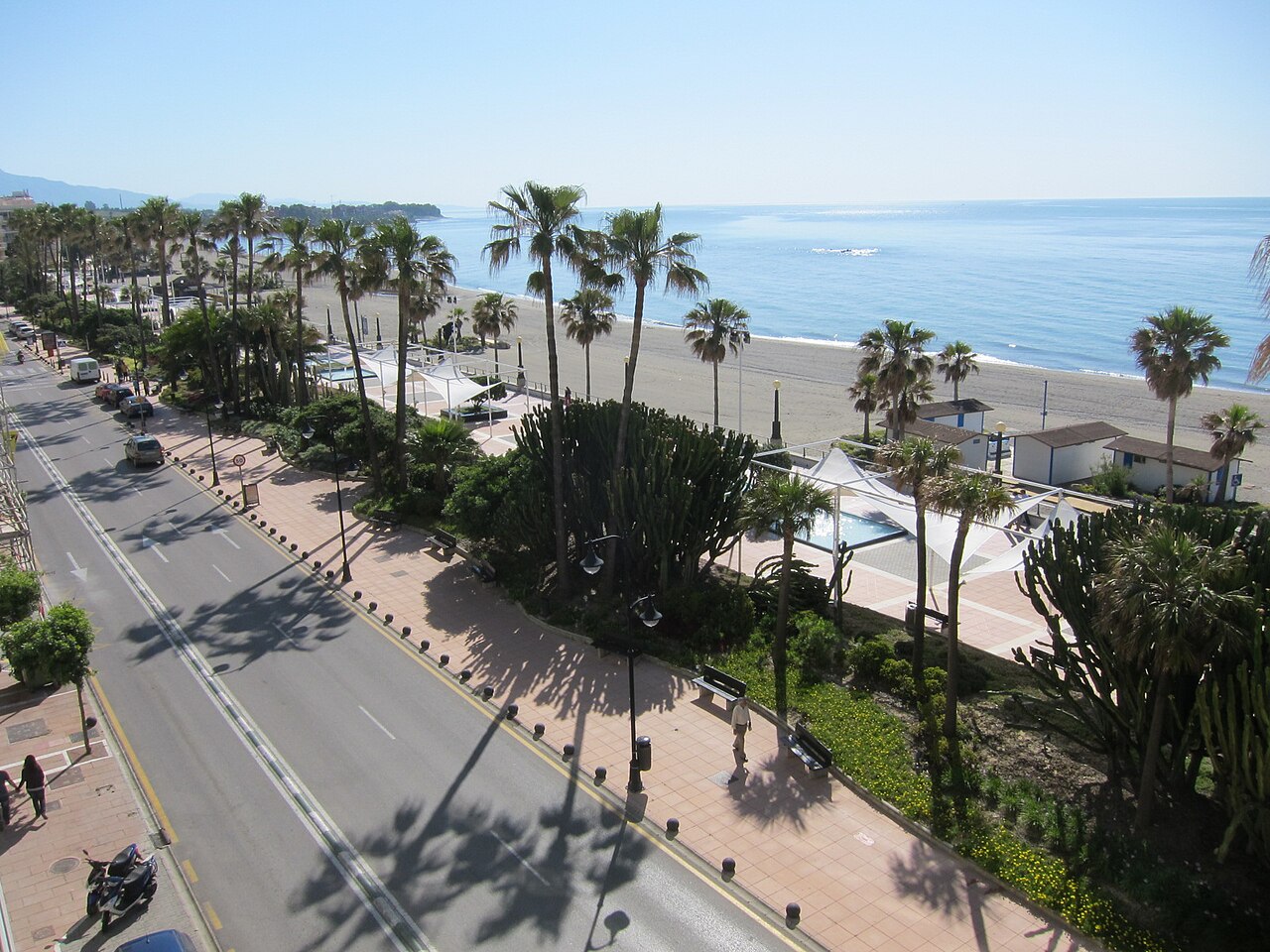
If beachfront matters more than anything else, our frontline beach selection is the shortlist, and our Estepona property page covers the rest. Every neighbourhood named above has its own area guide.
If you are weighing up a home near one of these beaches, call us at the Estepona office or book a call. We will tell you honestly which beach you would actually use.
Sources: turismo.estepona.es (beach pages by zone, 2026); MITECO Guía de Playas, 2015 edition via ESRI Spain open data (lengths, widths, sand, services, access); ADEAC, Relación Playas Galardonadas 2026 (PDF); Andalucía Información, 5 May 2026 (marina Blue Flag, 32nd year); Estepona TV, 15 June 2026 (lifeguard service 2026); Ayuntamiento de Estepona, 23 September 2024 (17 lifeguard towers tender); AZ Costa del Sol, 2025 (towers installed); Google Places, 8 October 2026 (ratings and review counts); Santina area guides, nearest beach field (walking times).
Frequently Asked Questions
What is the best beach in Estepona?
For most people La Rada, because it has everything: a 2.6 kilometre promenade, chiringuitos, showers and the biggest lifeguard team. For children, El Cristo, a sheltered cove with calm water. For space, El Saladillo or Casasola. For nobody around, Guadalmansa or Guadalobón.
Does Estepona have Blue Flag beaches?
Not in 2026. The official ADEAC list has no Estepona beach on it this year. Only the Estepona marina holds a Blue Flag, for the 32nd year running. Websites that say Estepona has four Blue Flag beaches are out of date.
Which Estepona beaches have lifeguards, and when?
Five beaches in summer 2026: La Rada, El Cristo, El Padrón, El Saladillo and Arroyo Vaquero, from 15 June to 15 September, 12:00 to 20:00 daily. The other eleven have no lifeguard.
Is Playa del Cristo good for children?
Yes. It is a small sheltered cove west of the port with calm, shallow water, lifeguards in summer, trees for shade and free assisted bathing for people with reduced mobility. It gets busy in July and August, so go early.
How many beaches does Estepona have?
Sixteen, along about 21 kilometres of coast. The town hall groups them as nine east of town, two in the centre and five to the west.
Are Estepona beaches sandy or pebbly?
Mostly dark sand with gravel or small pebbles, especially near the water. La Rada has fine grey sand. None of them is a pebble beach, and none is white sand.
Is there a naturist beach in Estepona?
Yes, Costa Natura, a small cove in the western zone between Guadalobón and Bahía Dorada, next to the naturist resort of the same name.
Which Estepona beaches are accessible for wheelchairs?
La Rada and El Cristo have free assisted bathing in summer, 12:00 to 20:00, with amphibious chairs. El Cristo and El Padrón have disabled parking and adapted changing rooms, showers and toilets. La Rada’s promenade is flat along its whole length.
Can I take my dog to Estepona beaches?
Not in the summer bathing season on regular beaches. Our Dog-Friendly Costa del Sol post lists every dog beach from Casares to Marbella and the rules for the rest of the year.
 English
 Spanish
 Dutch
Dutch French
 Polish
 Swedish
 German