
 ES
ES NL
NL FR
FR PL
PL SV
SV DE
DE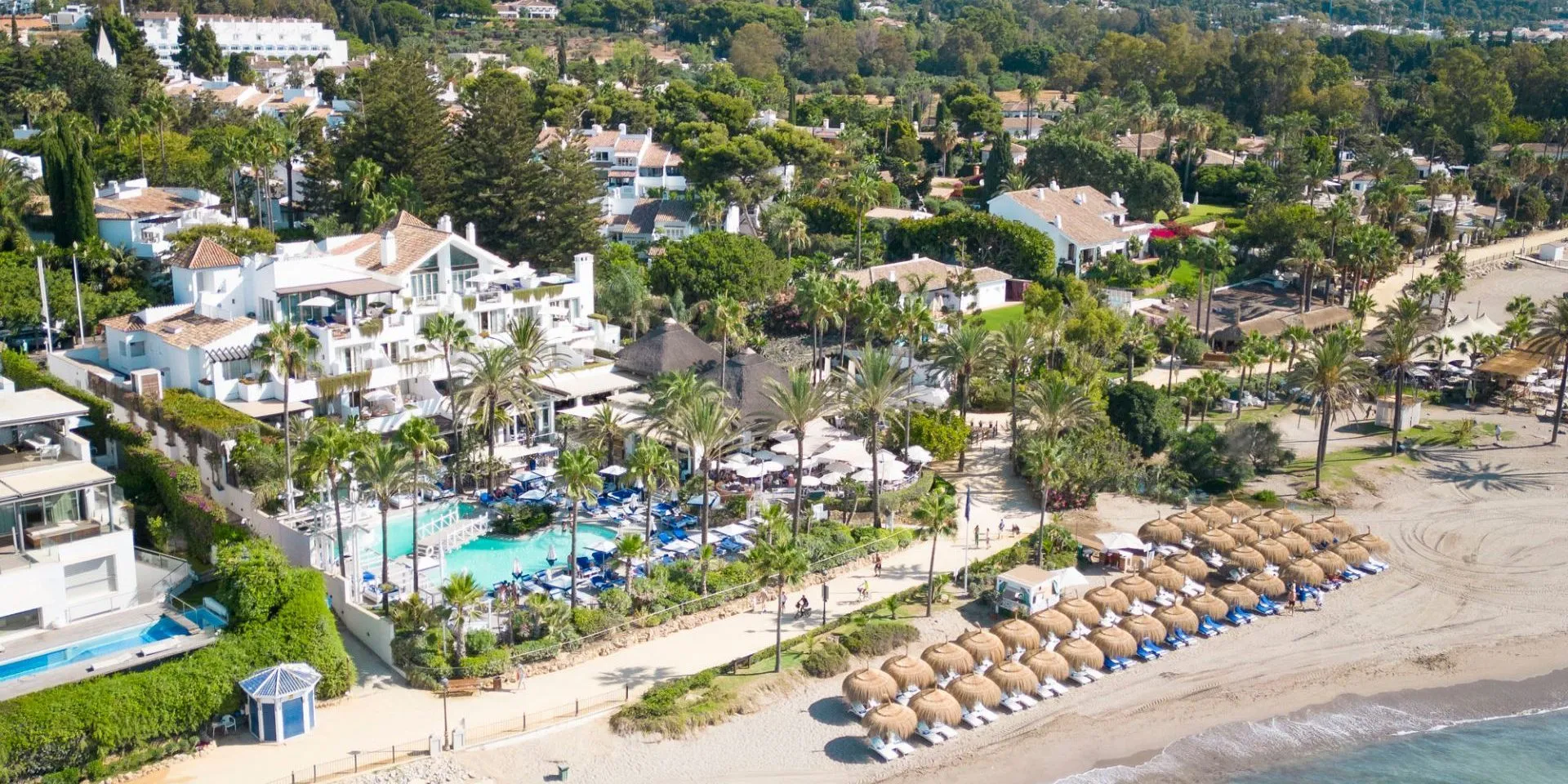
Before it had a name, the Golden Mile Marbella was a quiet stretch of coastline between a small fishing town and the sea, punctuated by farmhouses and cork oaks. Two hotels changed that, and remarkably, one man had a hand in building both of them. This is the history of Marbella told through the Marbella Club and Puente Romano Marbella, the two hotels that turned a forgotten corner of Andalucia into the address that international buyers still search out today.
How Prince Alfonso von Hohenlohe Discovered Marbella
The story begins in 1946, when Prince Max von Hohenlohe drove his Rolls-Royce Phantom down through southern Spain and stopped in Marbella. He was taken with the place, and the following year his son, Prince Alfonso von Hohenlohe, came back to buy an eighteen-hectare farmhouse called Finca Santa Margarita.
Prince Alfonso was in his twenties at the time, already well connected after years spent in the United States mixing with Hollywood’s social circles. He meant Finca Santa Margarita as a private retreat, somewhere to bring friends and family for the winter sun rather than a commercial venture. What he could not have predicted was how quickly word of the place would travel among his own social circle.
From Farmhouse to Marbella Club: The Opening of 1954
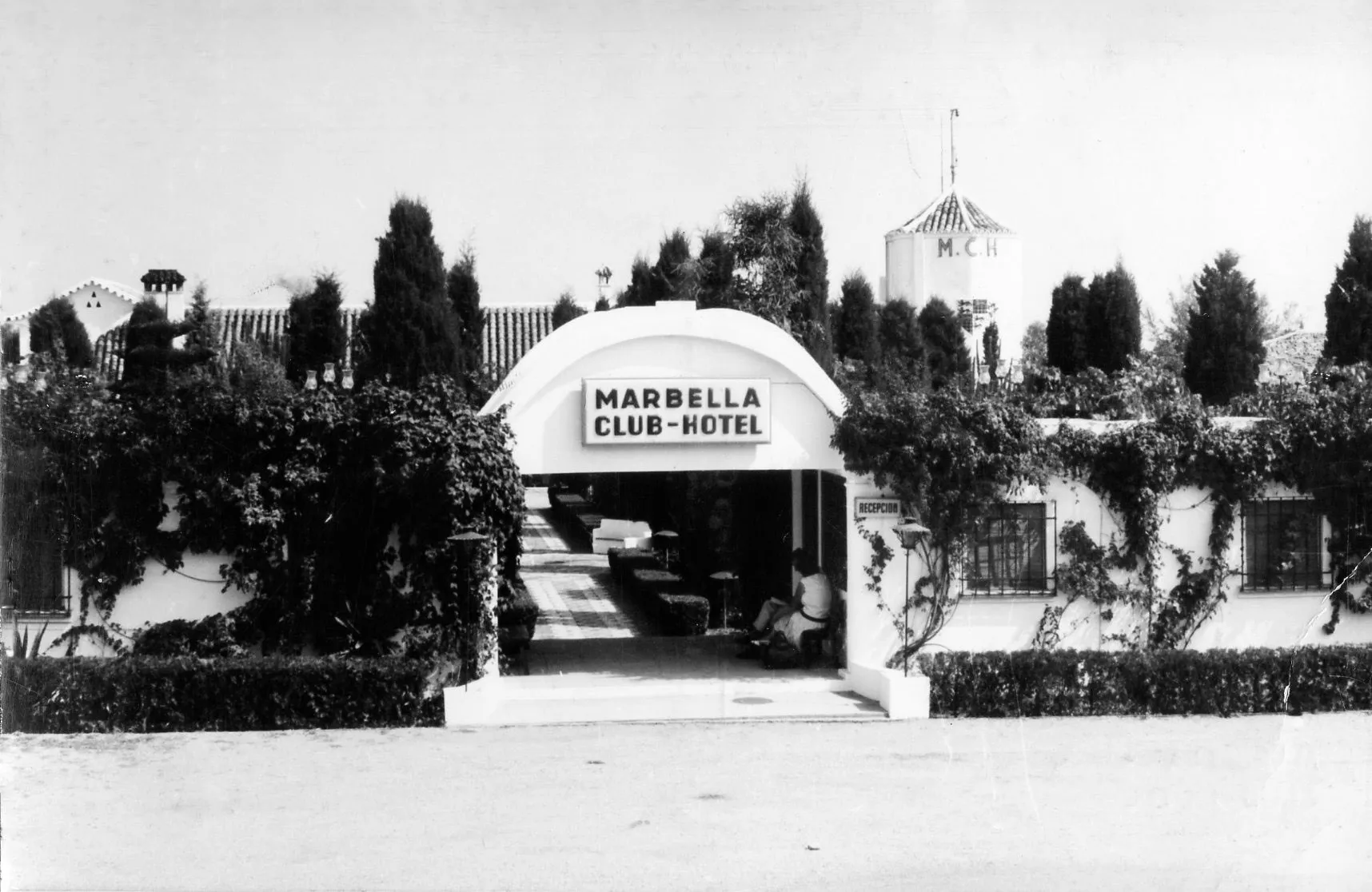
Guests kept arriving, and Prince Alfonso kept adding rooms to accommodate them. By 1954 the farmhouse had become a proper hotel in all but name, and that summer the Marbella Club Hotel opened its doors with twenty bedrooms, a drawing room, a dining room and a bar.
It was the first luxury hotel on the Costa del Sol, and its arrival marked the moment Marbella stopped being a small, sunny town of simple fishing cottages and started becoming something else entirely. The transformation did not happen overnight, but the Marbella Club was the spark that lit it.
European Aristocracy, Hollywood, and the Rise of Golden Mile Marbella
Prince Alfonso’s own address book became the Marbella Club Hotel’s guest list, and few address books of the era ran deeper. Through the late 1950s and into the 1960s, Frank Sinatra, Ava Gardner, Grace Kelly and Sean Connery all passed through the Marbella Club, alongside Audrey Hepburn, Sophia Loren, Brigitte Bardot and Elizabeth Taylor. Prince Rainier of Monaco brought his new wife, the former actress Grace Kelly, and even the Duke and Duchess of Windsor found their way to Prince Alfonso’s dining room.
Cary Grant and Laurence Olivier were regulars too, and later in the decade The Rolling Stones added a different kind of celebrity entirely to a guest list that already read like a Hollywood premiere. European aristocracy followed the same path. Families with names like Fürstenberg, Bismarck and Metternich, along with Scandinavian royalty and more than one exiled king, treated the Marbella Club as a fixture on their winter calendar. For roughly sixty years running, the hotel held its position as one of Europe’s defining meeting points for the international jet set, and word of mouth did what advertising never could.
As Marbella’s reputation spread through those same social circles, the strip of coastline running west from the town toward what would later become Puerto Banus began to earn its nickname. Golden Mile Marbella was no longer just a hotel address. It was becoming a place people wanted to be seen, and increasingly, a place people wanted to own property.
A Roman Bridge and a New Vision: The Founding of Puente Romano
By the early 1970s, Prince Alfonso saw an opportunity to build something new a short distance along the same coast. On the plot he chose stood a genuine Roman bridge, dated to the first century AD and originally part of the Via Augusta, the road that once connected Cadiz to Rome. Rather than build around it, he built the new resort in its honour and gave it the bridge’s name.
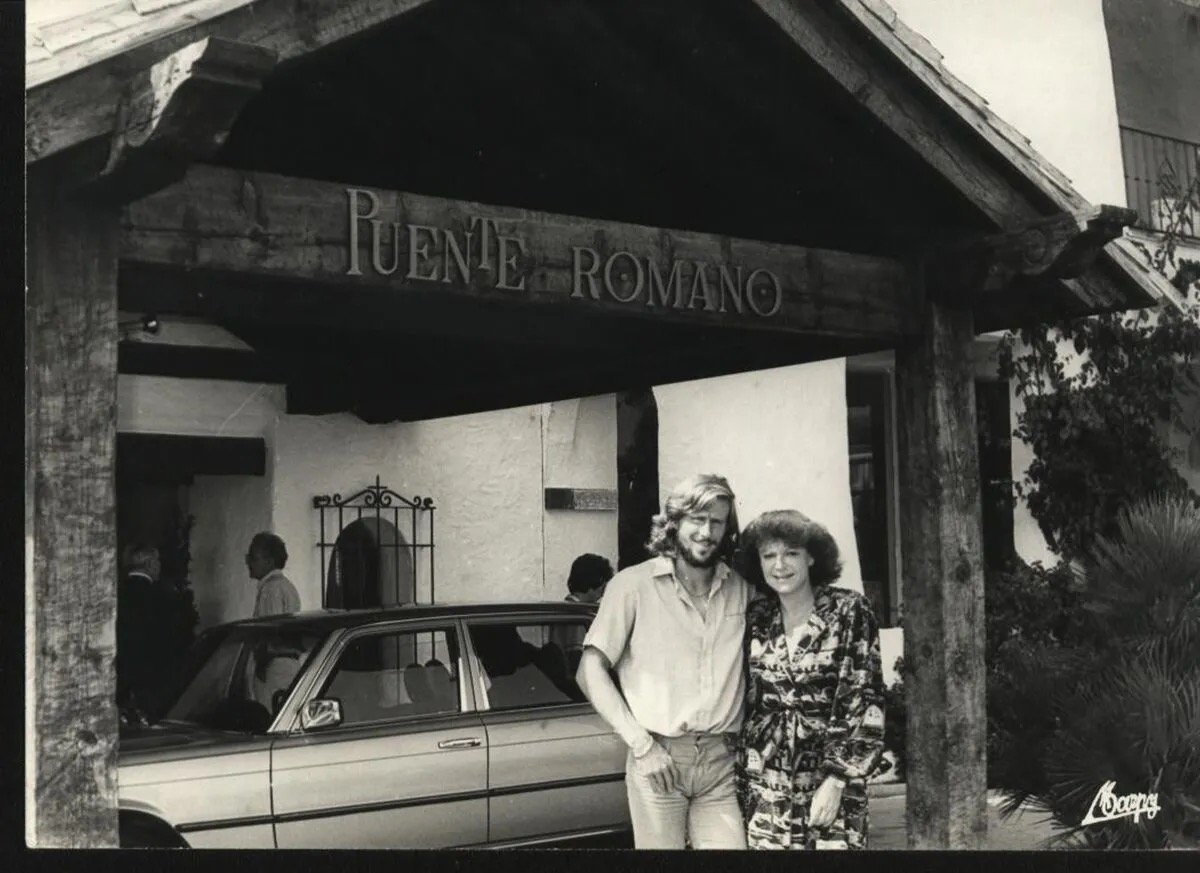
Construction began in 1974 under architect Melvin Villarroel, who designed the resort as a whitewashed Andalucian village rather than a conventional hotel block. Cobbled squares, terracotta roofs and courtyards heavy with bougainvillea replaced the glass and concrete that defined most coastal resorts of the era. What Prince Alfonso built was initially an apartment complex rather than a hotel, and it was a later buyer, the businessman Mouaffak Al Midani, who purchased the property and formally opened it as Puente Romano Marbella in 1979.
From Tennis Courts to Nobu: How Puente Romano Became a World Stage
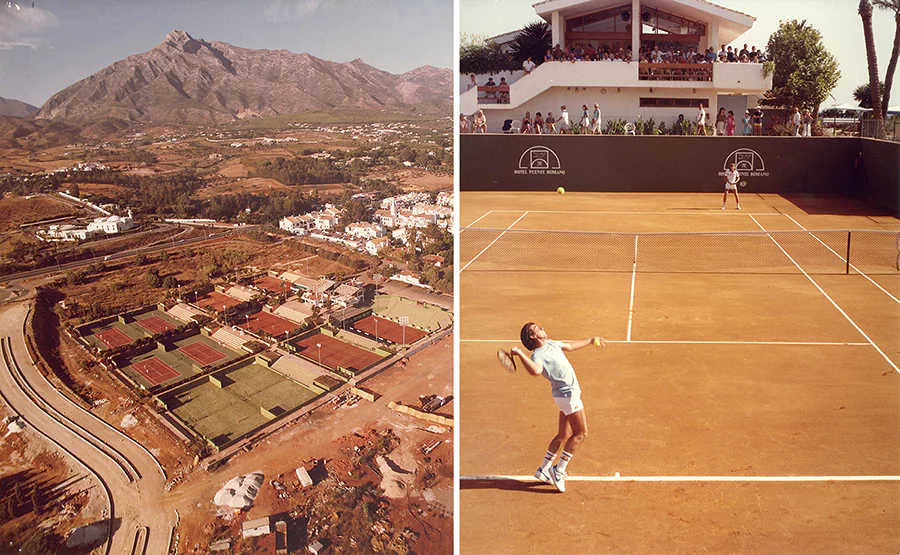
The Puente Romano Tennis Club opened alongside the hotel in 1979, and Bjorn Borg ran it in its first years, at the height of his career. Wimbledon champion Manolo Santana took over as the club’s director in 1983 and stayed until 1998, and between the two of them they built a guest list that reads like a history of the sport. Boris Becker, John McEnroe, Mats Wilander, Jim Courier, Yannick Noah, Pat Cash, Thomas Muster, Henri Leconte, Novak Djokovic, Martina Hingis and Serena Williams have all played or trained on its courts over the years.
The club’s Davis Cup pedigree runs just as deep. It staged the 1988 Davis Cup Final, where Spain beat Mexico, then a World Group first round tie against Great Britain in 2018. More recently it has become a regular fixture for the current Spanish team, hosting Carlos Alcaraz’s Davis Cup debut against Romania in 2022 and a tie against Denmark in 2025, a sporting pedigree entirely separate from the resort’s hospitality reputation and one that has outlasted any single era or owner.
Puente Romano has kept adding to itself in the decades since without losing the architectural character Villarroel gave it. La Plaza, the resort’s central square, is now home to Nobu and Coya, two of the most talked about restaurant and nightlife destinations on the Costa del Sol, sitting comfortably alongside the tennis club, the beach club and the original whitewashed apartments. Few resorts anywhere have managed to layer that much sporting history, that much culinary reputation and that much contemporary energy onto a single footprint without one crowding out the other.
Walk through the resort today and the layers are easy to read. The cobbled paths and courtyards Villarroel laid out in the 1970s still connect everything, so a morning on the tennis courts, an afternoon at the beach club and a late dinner at Nobu all happen inside the same continuous village rather than three separate destinations bolted together. That continuity, more than any single restaurant or celebrity guest, is what keeps Puente Romano relevant fifty years after ground was first broken.
Two Hotels, One Golden Mile: How Marbella’s Most Prestigious Address Took Shape
What makes this story unusual is that the same man laid the foundations at each end. The Marbella Club established the western edge of the strip in 1954, close to what is now Plaza Bocanegra, and the resort Prince Alfonso conceived at Puente Romano gave the stretch nearer Rio Verde its own identity twenty five years later. Between them, and in the decades since, developers filled in the coastline with the villas, gated communities and beachfront apartments that define the area now, from the mountainside estates of Sierra Blanca and Naguales to the beachside developments closer to Puerto Banus.
Closer to Puerto Banus, the same pattern repeats on a smaller scale. Urbanisations like Rio Verde, home to several newer property projects, and Urb Ancon, where the well known beach bar Victor’s Beach now sits, grew up in the same window of decades, filling the gap between the two founding hotels with places people could actually live rather than simply visit. El Oasis added apartment living and its own small shopping centre a little further along.
That is why buyers searching for an apartment for sale in Marbella Golden Mile, or a townhouse for sale in Marbella Golden Mile, keep landing on the same five kilometres of coast between the two hotels. The demand was not manufactured by a marketing campaign. It grew organically from two properties that gave people a reason to visit, then a reason to stay, then a reason to buy a home of their own nearby, and it shows in the new developments in Marbella still going up along the same stretch today.
Golden Mile Marbella Today
Both hotels are still open and, in an unexpected twist to Prince Alfonso’s original story, both now belong to the same family. Puente Romano passed through more than one owner after its 1979 opening, including Syrian businessman Mouaffak Al Midani, before London businessman David Shamoon acquired it in 1995. David had left Iraq in the 1950s and made his name running nightclubs in swinging-sixties London, including the Speakeasy and Blaises, before turning to Spanish real estate. The Marbella Club later joined the same portfolio, quietly reuniting the two properties Prince Alfonso had set in motion a generation apart.
Today both hotels sit within the family’s Bursha Holdings and Luxury Hotel Partners group, run day to day by David’s children, Daniel and Jennica Shamoon. Daniel oversees Puente Romano and Jennica leads the Marbella Club, and between them the siblings also hold a stake in Nobu Hotels and run properties as far afield as Hermitage Bay in Antigua, and the family also owns El Lodge and Maribel in Sierra Nevada, which we cover in our ski season guide. Marbella Club marked its seventieth anniversary in 2024, still recognisably the low rise, garden filled hotel it was in 1954. Puente Romano has grown into something closer to a small resort town, without losing the whitewashed, village feel Villarroel gave it back in 1974.
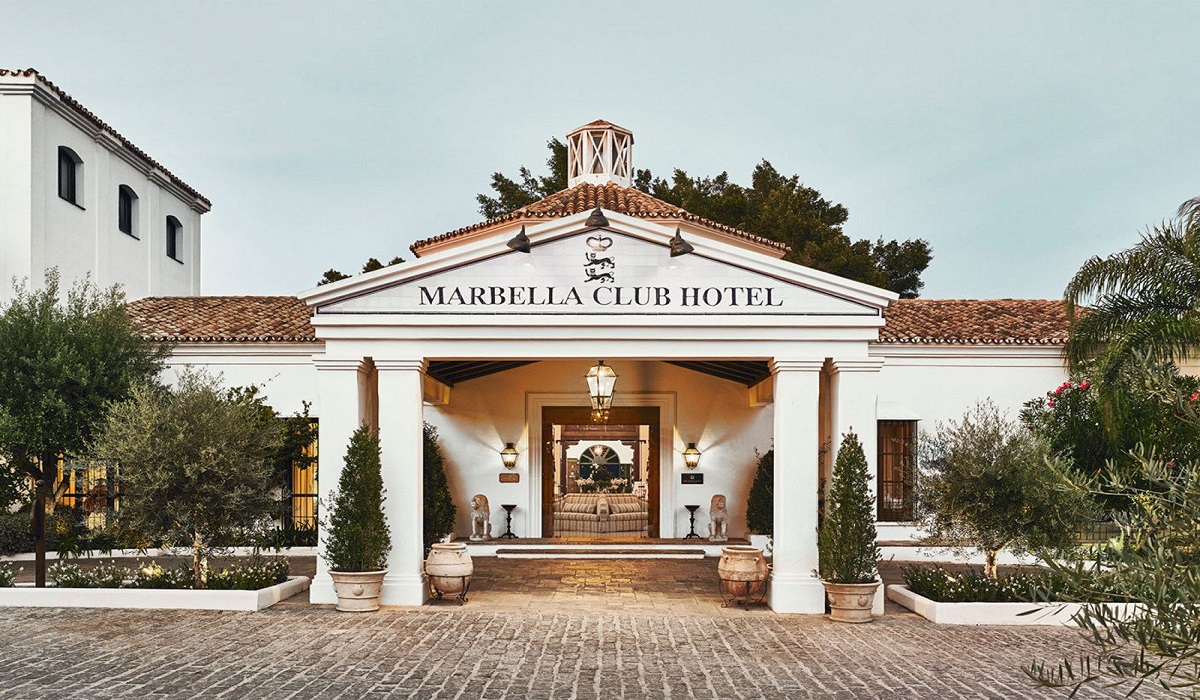
Walk the Golden Mile today and the pattern from seventy years ago is still visible. Two hotels gave this stretch of coast its reputation, and everything built around them since, from private villas on the hillside to boutique beachfront developments, has traded on that same reputation. For anyone drawn to the history as much as the lifestyle, understanding how the Golden Mile came to be makes the decision to put down roots here feel less like following a trend and more like joining a story that has been unfolding since 1954, and it is a story our own properties for sale on the Golden Mile are still part of today.
The same formula is now moving east of town. At the eastern entrance to Marbella, past Río Real, a 32-hectare beachfront plot is being prepared for a new Four Seasons resort with branded residences, a project created by Ricardo Arranz that is now in the hands of Immobel and Fort Partners.
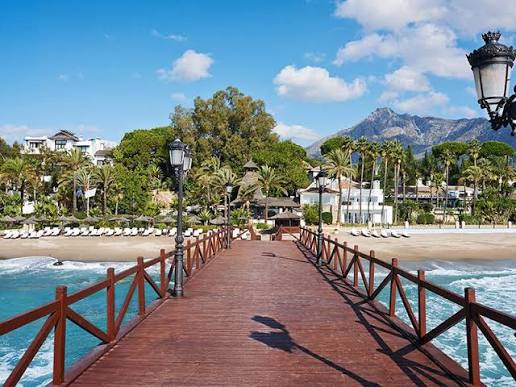
If you want the Golden Mile as it is today rather than how it began, our Golden Mile area guide covers the map, the urbanisations on both sides of the road, 2026 prices and what is for sale.
Questions People Are Asking
Who founded the Marbella Club?
Prince Alfonso von Hohenlohe, a Spanish aristocrat who had spent his twenties in the United States, founded the Marbella Club. He converted his private farmhouse, Finca Santa Margarita, into a hotel that opened in the summer of 1954.
When did the Marbella Club open?
The Marbella Club opened in 1954 with twenty bedrooms, a drawing room, a dining room and a bar. It is generally regarded as the first luxury hotel on the Costa del Sol.
Why is Puente Romano called Puente Romano?
The resort takes its name from a genuine Roman bridge on the grounds, dated to the first century AD and originally part of the Via Augusta, the road that once linked Cadiz to Rome.
When did Puente Romano open as a hotel?
Prince Alfonso von Hohenlohe began building the site as an apartment complex in 1974. Businessman Mouaffak Al Midani later purchased the property and opened it formally as Hotel Puente Romano in 1979.
Who designed Puente Romano?
Architect Melvin Villarroel designed Puente Romano as a whitewashed Andalucian village, with cobbled squares and terracotta roofs, rather than a conventional hotel block.
Who owns the Marbella Club and Puente Romano now?
Both belong to the Shamoon family. London businessman David Shamoon acquired Puente Romano in 1995 and later brought the Marbella Club into the same portfolio. His children now run the two hotels day to day, with Daniel Shamoon overseeing Puente Romano and Jennica Shamoon leading the Marbella Club, alongside the family’s wider Bursha Holdings and Luxury Hotel Partners group.
What is the Golden Mile in Marbella?
The Golden Mile is the roughly five kilometre stretch of coastline between central Marbella and Puerto Banus, anchored historically by the Marbella Club and Puente Romano. It is now one of the most sought after residential areas on the Costa del Sol.
Which tennis players have played at Puente Romano?
Bjorn Borg and later Wimbledon champion Manolo Santana ran the tennis club in its first two decades, and the courts have hosted Boris Becker, John McEnroe, Mats Wilander, Jim Courier, Novak Djokovic, Martina Hingis and Serena Williams, among others.
Has Puente Romano hosted the Davis Cup?
Yes, several times. It staged the 1988 Davis Cup Final between Spain and Mexico, a first round tie against Great Britain in 2018, Carlos Alcaraz’s Davis Cup debut against Romania in 2022, and a tie against Denmark in 2025.
The Golden Mile’s present is just as active as its past. Kena by Akiro opened a new rooftop nearby, the Saudi royal family is expanding its own estate here, and Puente Romano just hosted the padel circuit that brought Alcaraz to town.
 English
 Spanish
 Dutch
Dutch French
 Polish
 Swedish
 German