
 EN
EN ES
ES NL
NL PL
PL SV
SV DE
DEQu'est-ce que San Pedro de Alcántara ?
San Pedro de Alcántara est une ville active de la municipalité de Marbella, comptant environ 39 000 habitants. Elle a débuté en 1860 en tant que colonie agricole fondée par Manuel Gutiérrez de la Concha, construite autour de la culture de la canne à sucre sur près de 5 000 hectares s'étendant sur trois municipalités — l'une des colonies agricoles les plus importantes de l'Espagne du XIXe siècle. Cette histoire est toujours visible au Trapiche de Guadaiza, le moulin à sucre de la colonie datant de 1823, utilisé ultérieurement comme école agricole et maintenant restauré en tant que centre culturel.
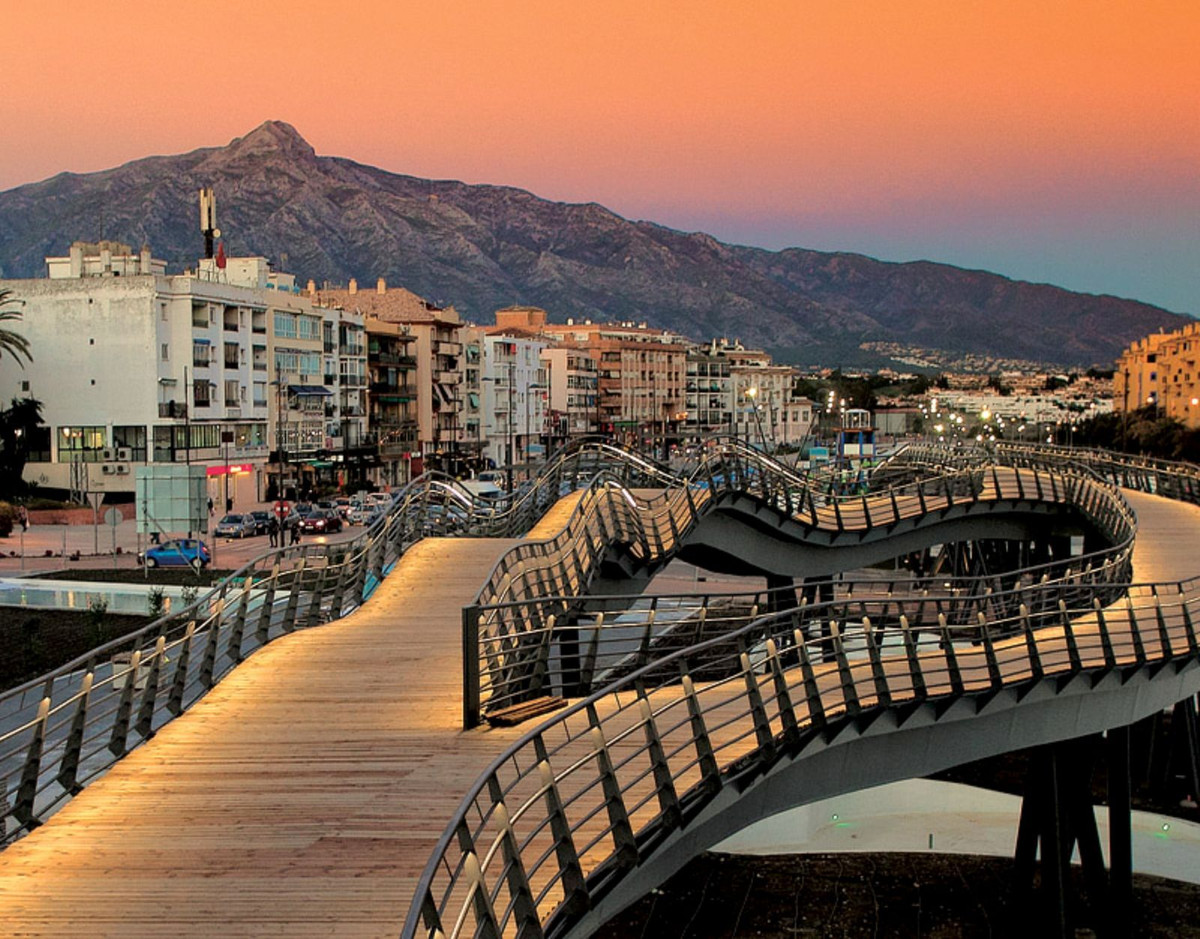
Contrairement aux domaines de golf et aux urbanisations fermées qui dominent une grande partie du littoral de Marbella, San Pedro est une ville autonome dotée de son propre centre, marché, écoles et front de mer, reliée à la mer par une promenade piétonnière. Elle porte également une couche d'histoire bien plus ancienne : des thermes d'époque romaine des IIe-IIIe siècles et une basilique paléochrétienne datant des IVe-VIe siècles, avec doubles absides et fonts baptismaux considérés comme parmi les meilleures exemples conservés d'architecture chrétienne primitive de la Péninsule Ibérique. Ces sites sont distincts du bâtiment du Trapiche et se situent dans la zone archéologique de la ville.
Le résultat est une communauté mixte et toute l'année plutôt qu'une station balnéaire saisonnière — des habitants travaillant dans la ville et dans les secteurs de l'hôtellerie et du golf à proximité, aux côtés d'une population de résidents étrangers bien établis attirés par la combinaison d'un centre-ville authentique, de rues plates et accessibles, et d'un accès facile à la plage et à Marbella et Puerto Banús le long de la côte.
San Pedro de Alcántara district par district
San Pedro est une ville avec des quartiers autour d'elle, et quatre d'entre eux ont leurs propres guides. Le pueblo lui-même, autour de la place de l'église et des rues piétonnes, propose des appartements et des maisons de ville, le marché du jeudi et le Trapiche. Entre la ville et la plage, Nueva Alcántara est le quartier familial d'appartements et de maisons de ville, et Linda Vista les rues de villas en bord de mer plat sur le côté ouest. De l'autre côté du fleuve Guadalmina, Guadalmina Baja et Guadalmina Alta se trouvent les terrains de villas matures de part et d'autre des terrains de golf à la frontière d'Estepona, et à l'est de la ville, vers Puerto Banús, Cortijo Blanco est la bande littorale où se construisent les villas les plus récentes. Le boulevard au-dessus du tunnel de l'A-7 les relie tous au front de mer.
San Pedro en 2026
San Pedro est l'endroit où le nouveau bâti de Marbella se réalise réellement aux prix de la ville. Les projets que nous proposons au moment de la rédaction (octobre 2026) incluent Alcántara del Mar et Salvia II à Nueva Alcántara, Breeze à Guadalmina Alta, et les villas en bord de mer Sotomar by the Sea et Beseven à Cortijo Blanco, à partir d'environ 620 000 euros pour un appartement jusqu'à plusieurs millions pour une villa sur le sable, tous sur notre page des nouveaux développements de Marbella; les reventes se trouvent sur notre page de propriétés à San Pedro et la page Marbella. Les prix à San Pedro s'élèvent en moyenne à environ 5 450 euros le mètre carré contre près de 7 000 sur la Golden Mile, comme notre perspective du milieu d'année l'indique, et l'impôt de mutation sur une revente baisse à 6,75 pour cent en 2027. L'A-7 entre ici et Estepona reçoit des écrans acoustiques.
Où se trouve San Pedro de Alcántara ?
Qui vit à San Pedro de Alcántara ?
Un mélange de familles espagnoles qui vivent dans la ville depuis des générations et d'une communauté internationale de longue date, beaucoup travaillant dans les secteurs environnants de l'hôtellerie, des services et du golf. San Pedro fonctionne comme une véritable ville plutôt qu'un développement touristique, il attire donc des résidents toute l'année plutôt que de simples acheteurs saisonniers — y compris des personnes qui souhaitent être à proximité de Marbella et Puerto Banús sans payer les prix des stations balnéaires, et des acheteurs en quête d'un centre-ville plat et accessible plutôt qu'une urbanisation en montagne.
Que peut-on faire à San Pedro de Alcántara ?
Restaurants & Bars
Sport & Forme
Enfants & Famille
Vous cherchez du neuf plutôt que de la revente ? Voir les nouveaux programmes à San Pedro de Alcántara →
Vous souhaitez vivre sur le parcours ? Consulter les propriétés golf à vendre →
Constructions neuves près de San Pedro de Alcántara
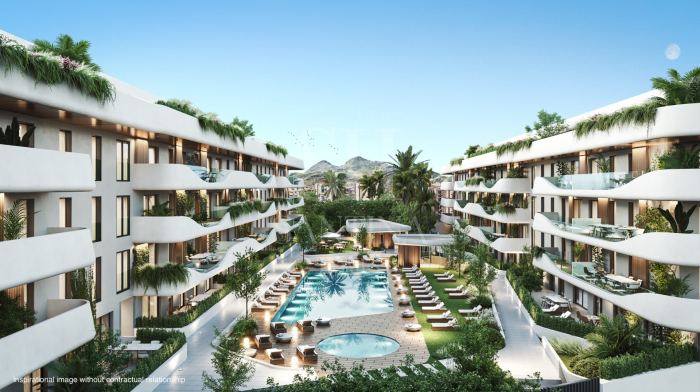
Salvia II
Nueva Alcantara
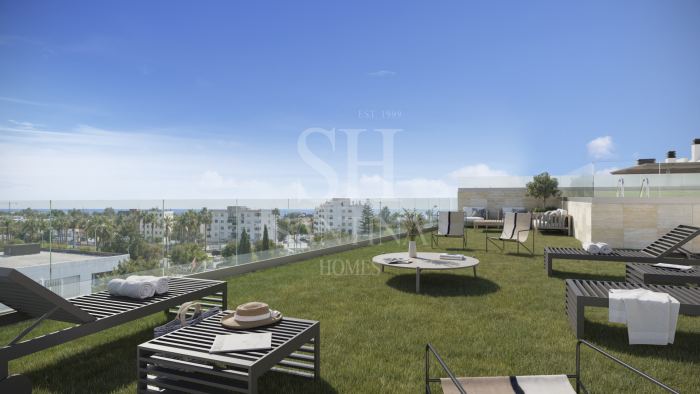
Zinnia
Marbella
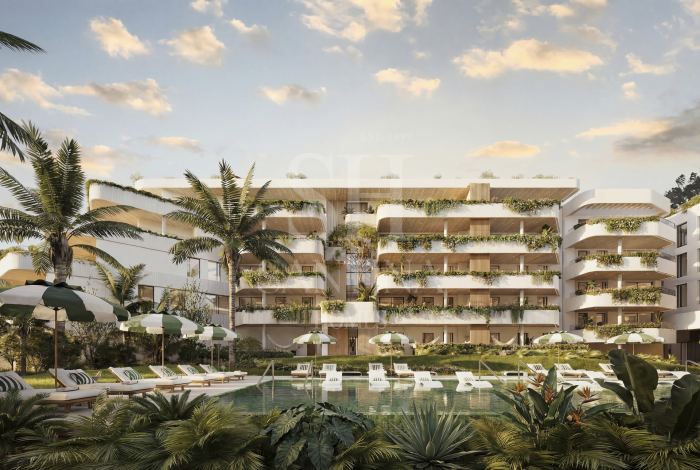
The Grove
Marbella
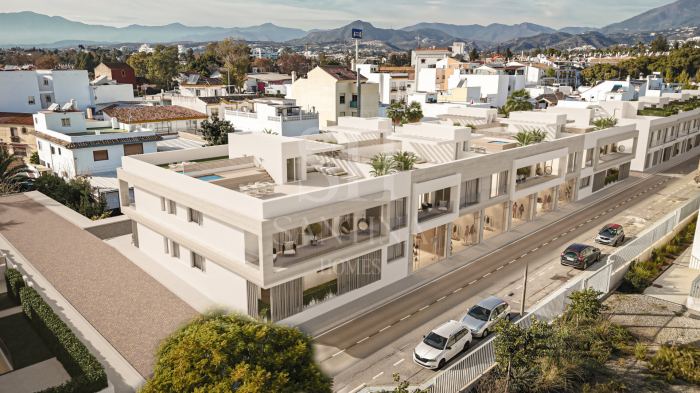
Alcántara del Mar
Nueva Alcantara
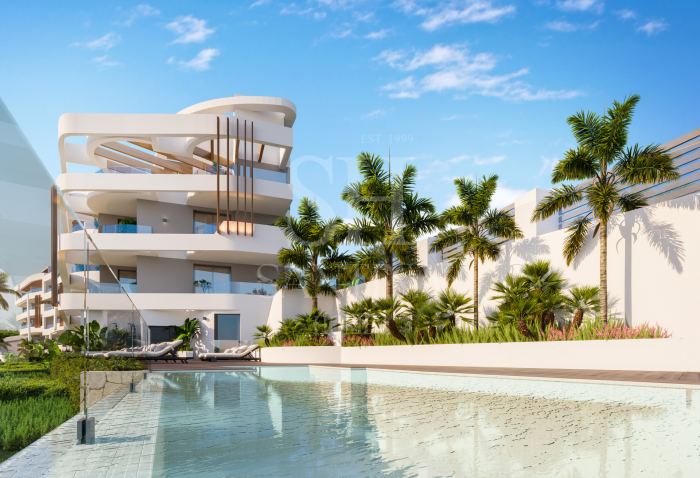
Breeze
Guadalmina Alta
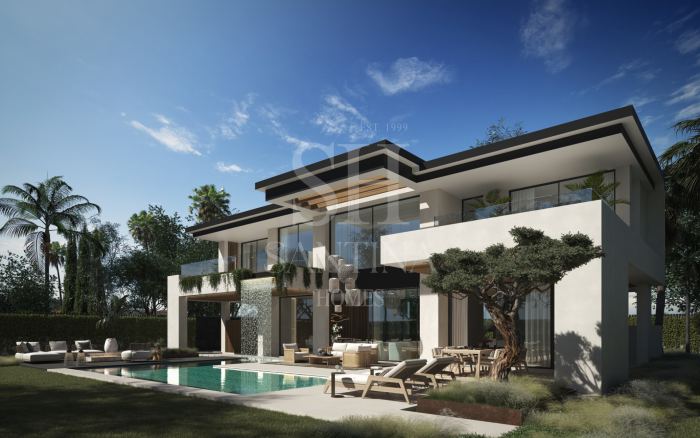
Beseven
Cortijo Blanco
Voir toutes les constructions neuves à Marbella →
Questions fréquentes
San Pedro de Alcántara est-il un développement fermé ou un resort ?
Non. C'est une ville ordinaire de la municipalité de Marbella, avec une population d'environ 39 000 habitants, son propre centre-ville, marché et écoles — pas un domaine de golf nommé ou une urbanisation fermée.
Le Trapiche à San Pedro sont-ils des ruines romaines ?
Non. Le Trapiche de Guadaiza est un moulin à sucre restauré du 19e siècle (construit en 1823) qui a ensuite servi d'école agricole et est maintenant un centre culturel. San Pedro possède de véritables vestiges de l'époque romaine — des thermes et une basilique paléochrétienne — mais ce sont des sites distincts du bâtiment du Trapiche.
Est-ce que Tragabuches, le restaurant de Dani García, est à San Pedro ?
Non. Tragabuches était le restaurant étoilé Michelin original du chef Dani García, situé à Ronda, pas à San Pedro ou en centre-ville de Marbella. García a quitté Tragabuches vers 2005-2006 pour ouvrir Calima au Puente Romano à Marbella ; le restaurant de Ronda a fermé par la suite. Il n'y a pas de restaurant Dani García actuel à San Pedro.
À quelle distance San Pedro est-il de Marbella et Puerto Banús ?
San Pedro s'étend le long de la côte à l'ouest de Marbella, facilement accessible à la fois à Marbella en centre-ville et à Puerto Banús en voiture via le corridor AP-7/A-7.
Avez-vous besoin d'une voiture à San Pedro de Alcántara ?
Non pour la vie quotidienne dans le centre-ville, qui dispose de supermarchés, de pharmacies et d'un accès piétonnier à la plage le long de l'Avenida Andalucía. Une voiture est utile pour les clubs de golf, les écoles et les villes côtières à proximité.
Où se trouve San Pedro de Alcántara ?
Sur la côte, 10 km à l'ouest du centre de Marbella, à l'intérieur de la commune de Marbella, entre Puerto Banús et la frontière d'Estepona à Guadalmina. Puerto Banús est à 5 minutes en voiture, le centre de Marbella à 15, l'aéroport de Málaga à environ 55.
San Pedro de Alcántara fait-il partie de Marbella ?
Oui. San Pedro est un district de la commune de Marbella doté de son propre bureau municipal, marché, écoles et boulevard. Il partage les impôts, les règles d'urbanisme et l'hôpital de Marbella.
Quels sont les quartiers de San Pedro de Alcántara ?
Le pueblo lui-même, Nueva Alcántara entre la ville et la plage, Linda Vista sur le littoral occidental, Guadalmina Baja et Guadalmina Alta de l'autre côté du fleuve, et Cortijo Blanco sur la plage vers Puerto Banús. Quatre d'entre eux ont leurs propres guides, reliés dans la section district par district ci-dessus.
Quels nouveaux projets se trouvent à San Pedro de Alcántara ?
Au moment de la rédaction, nous proposons Alcántara del Mar et Salvia II à Nueva Alcántara, Breeze à Guadalmina Alta, et les projets de villas en bord de mer Sotomar by the Sea et Beseven à Cortijo Blanco. La liste complète avec les prix se trouve sur notre page des nouveaux projets de Marbella.
Combien de personnes vivent à San Pedro de Alcántara ?
Environ 39 000, ce qui en fait le deuxième centre de la commune de Marbella après la ville elle-même, et une vraie ville plutôt qu'une urbanisation : des familles espagnoles qui y vivent depuis des générations aux côtés d'une communauté internationale bien établie.
Vous ne savez pas quel secteur vous convient ?
Trouvez votre zone parfaite
Répondez à notre quiz Zone Finder et nous vous correspondrons à l'une des 65 zones ou plus que nous couvrons.
Répondez au quiz Zone Finder →Intéressé par San Pedro de Alcántara ?
Notre equipe connait cette zone sur le bout des doigts. Laissez-nous vous aider a trouver le bien ideal.
Contactez-nous English
 Spanish
 Dutch
Dutch French
 Polish
 Swedish
 German